







AI PTZ Auto Tracking: Hype vs. Reality
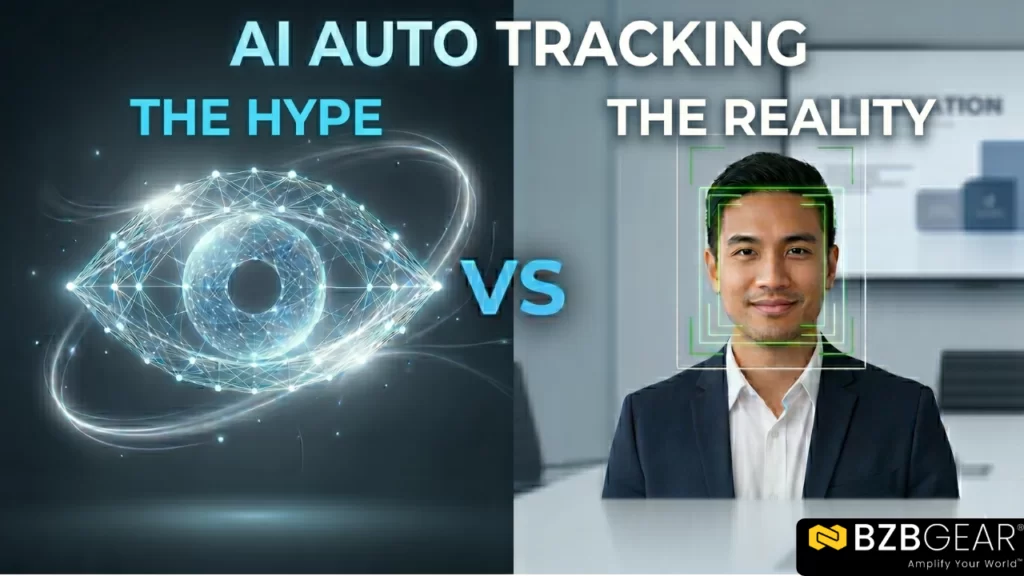
A question I get a lot when walking customers through PTZ cameras is, "Can I just turn on auto tracking and let the camera do the rest?" And I get why people ask. The marketing around AI tracking makes it sound like you can fire and forget — set the camera up on Sunday morning, hit a button, and never think about it again. The truth is a little more nuanced than that.
AI auto tracking is a genuinely useful feature, and it has come a long way in the last few years. But it works best when you understand what it actually is, what it can do, and where it still needs a human in the loop. Let's break it down.
What AI Tracking Actually Is
At its core, AI auto tracking uses an algorithm to identify a subject — usually a person — and then commands the camera's pan, tilt, and zoom motors to keep that subject framed. Think of it like a very fast, very tireless assistant whose only job is to keep one thing in the middle of the shot. It does not understand context, intent, or storytelling. It understands shapes, motion, and edges.
That distinction matters. A human camera operator decides what to show. AI tracking only decides how to follow what it has been pointed at. Once you internalize that, the rest of the conversation gets a lot easier.
AI Is a Tool, Not a Replacement

Here at BZBGEAR, we think of AI tracking the same way we think of any other production tool — a great extender of human capability, not a replacement for human judgment. It is fantastic at the repetitive, attention-intensive work that wears operators down: holding a steady frame on a presenter who paces back and forth, keeping a worship leader centered during a 45-minute set, or maintaining a clean two-shot of a panel that keeps shifting in their chairs.
For small teams, that is a real productivity unlock. A house of worship that used to need three camera operators on Sunday morning can sometimes get by with one director and a couple of auto-tracked PTZs. A university lecture capture system can run unattended in 80 classrooms at once. None of that was practical a decade ago.
The trap is treating "useful" as "automatic." AI tracking lowers the floor; it does not raise the ceiling. Your best Sunday service or championship game still needs someone making creative calls.
When You Still Need an Operator
There are a few production scenarios where a human operator earns their pay every single time.
The first is anything with editorial intent — picking the right reaction shot, anticipating a play, cutting to a crowd at the perfect moment. AI cannot read a quarterback's eyes or know that the soloist is about to step forward. It only reacts to what already happened.
The second is multi-camera live switching with a narrative. Sports, concerts, and theatrical productions all rely on shot variety, framing intent, and rhythm. AI tracking can absolutely run one of your cameras as a "safety" or wide-on-subject shot, but a director still needs to be calling the show.
The third is high-stakes single-camera work where a missed frame means a missed moment. Weddings, keynote addresses, and live news interviews all fall into this bucket. Use AI as your insurance policy, not your primary plan.
Where AI Tracking Still Struggles
Even the best AI tracking systems have predictable failure modes. Knowing them ahead of time saves you from finding out on game day.
Fast, unpredictable movement is the classic one. A point guard breaking to the basket, a child running across a stage, a guitarist suddenly jumping forward — AI can lose lock or lag behind for a beat. The faster the subject and the tighter your zoom, the more obvious the lag becomes.
Multiple subjects in frame is the second. When a worship team gathers, when a panel of speakers cluster together, or when students crowd around a whiteboard, the algorithm has to guess who matters most. Some cameras let you lock onto a specific person, but transitions between subjects rarely look as clean as a human cut.
Challenging lighting is the third. Strong backlight, hard shadows, stage lights that wash out faces, and high-contrast scenes can all confuse the detection model. The same is true for unusual costuming, masks, or anything that hides the human silhouette the AI is trained to recognize.
None of these are dealbreakers. They are just the seams in the technology that you should plan around.
BZBGEAR Highlight: Auto Tracking Done Right
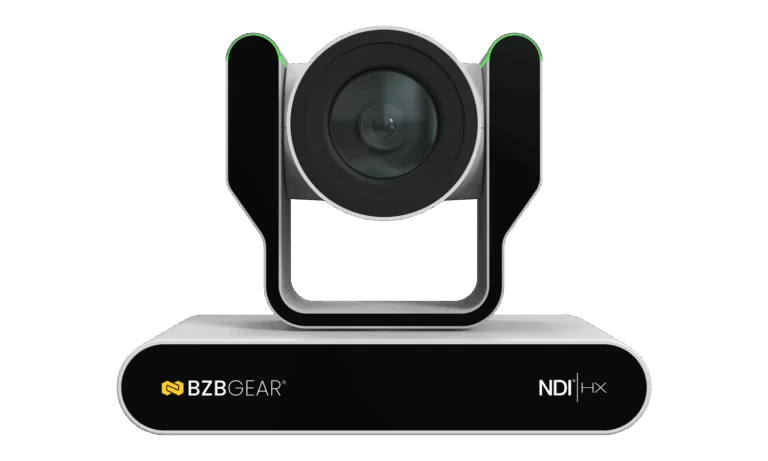
If you want to put a capable auto-tracking PTZ to work in your venue, the BZBGEAR BG-ADAMO-4K is a great place to start. It is a 4K UHD PTZ camera with built-in auto tracking, 25X optical zoom, tally lights, and a deep interface stack — HDMI 2.0, 12G-SDI, USB 3.0, and PoE-powered IP with NDI|HX3 or Dante AV-H if desired. That makes it flexible enough to slot into a lecture hall, a sanctuary, or a courtside multi-cam rig with whatever workflow you already run.
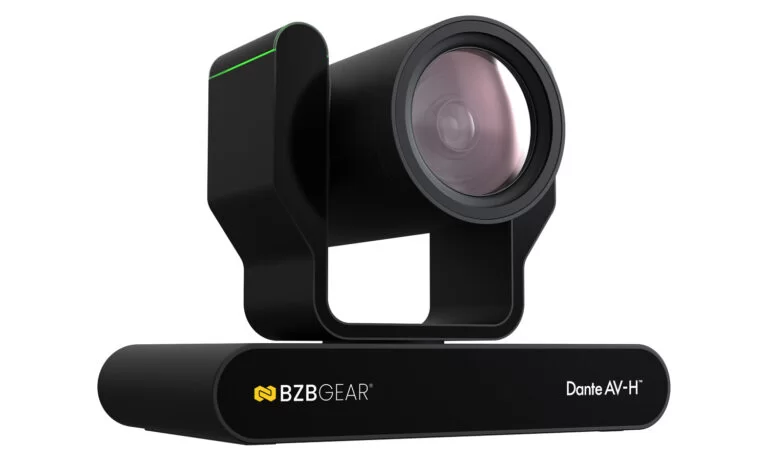
For smaller rooms or tighter budgets, the BG-ADAMO-JR is the 1080P FHD sibling — same auto-tracking philosophy, same tally lights, same NDI|HX3 or Dante AV-H tech stack, and actually a longer 30X optical zoom for venues where reach matters more than 4K resolution. Use either of them as the second or third camera on your live show, the safety shot during a keynote, or the unattended camera in classrooms while your operators focus on the high-value rooms. That is where auto tracking truly shines.
The Bottom Line
AI auto tracking is real, it is useful, and it is here to stay. Just don't expect it to replace the operator who knows your venue, your subjects, and your show. Use it the way you would use any other piece of professional gear — as one more tool in a well-built kit.
If you are weighing auto-tracking PTZs for your next install and want help matching the camera to the room, reach out — we are happy to walk through it with you. Explore the full lineup of BZBGEAR PTZ cameras here to find the right fit.


8.00 a.m. - 5.00 p.m. (PST)
10.00 a.m. - 3.00 p.m. (PST)
(by appointment only)