







How AI Is Transforming PTZ Cameras and Video Production
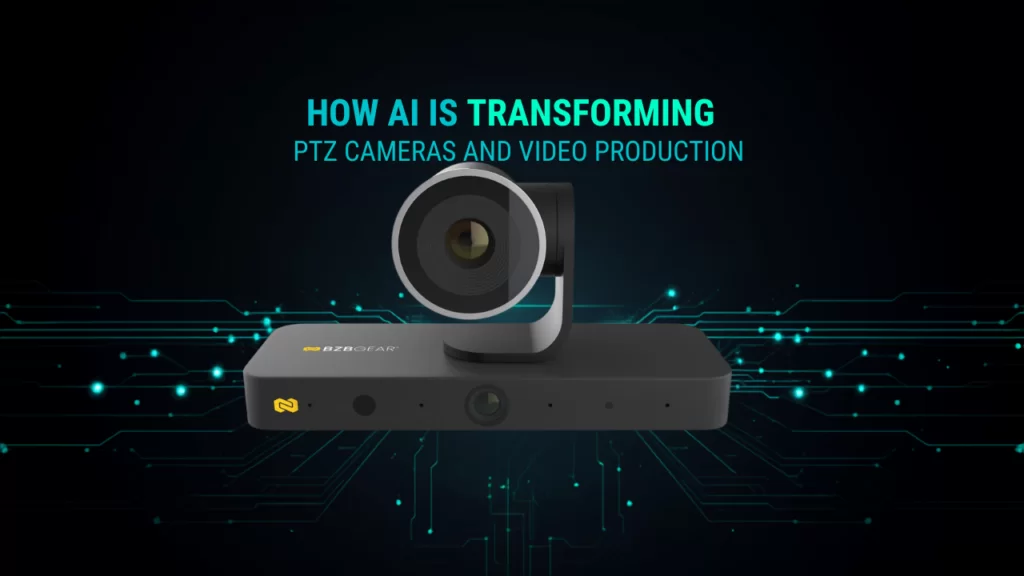
Not too long ago, getting a clean, professional-looking multi-camera production meant one thing: people. You needed an operator behind every camera, panning to follow a presenter, tightening the zoom at just the right moment, and a director calling shots to keep it all in sync. It worked, but it was expensive, and it wasn't an option for the solo streamer, the classroom teacher, or the small church running a service on a shoestring crew.
That's changing fast. Artificial intelligence (AI) has quietly moved from a buzzword into something that actually lives inside the camera on the wall — and it's reshaping what a single person, or no person at all, can pull off. Let's break down what's really happening.
What "AI" Actually Means in a PTZ Camera
First, a quick refresher. A PTZ (pan-tilt-zoom) camera is a motorized camera that can physically swivel side to side, tilt up and down, and zoom in and out — all remotely, without anyone touching it. Traditionally, a human drove those movements with a joystick or a set of saved presets.
AI changes who's holding the joystick. Instead of waiting for a person to tell it where to look, an AI-enabled camera uses onboard image analysis to understand what it's seeing — where the people are, who's talking, how many faces are in the room — and then makes those pan, tilt, and zoom decisions on its own, in real time.
Think of it like the difference between a car with cruise control and a car that actually steers itself around the curve. The mechanics are the same. The intelligence deciding how to use them is what's new.
Auto-Tracking: A Camera Operator That Never Blinks
The headline feature is auto-tracking. Point an AI camera at a stage or a whiteboard, and it will lock onto your subject and follow them as they move — keeping them centered and properly framed without a single input from you.
For a teacher pacing the front of a lecture hall, a pastor walking the platform, or a fitness instructor moving around a studio, this is the game right here. The presenter just does their thing, and the camera keeps them in frame the whole time. No operator, no awkward "please stay in the box" instructions, no shots that drift off to one side.
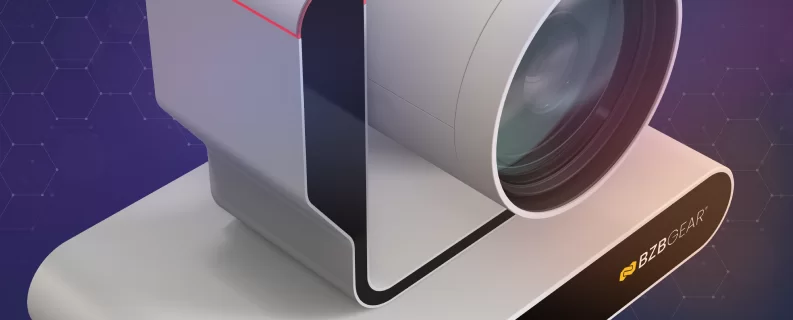
Here at BZBGEAR, this is exactly what the BG-ADAMO-4K was built for. It's a 4K UHD auto-tracking PTZ camera with up to 25X optical zoom and a Sony CMOS sensor, so it can lock onto a subject across a large room and follow them smoothly while holding sharp, broadcast-quality detail.
Auto-Framing and Speaker Tracking in the Meeting Room
The same intelligence is transforming the conference room, just with a different job to do. Instead of following one moving presenter, meeting cameras use two closely related tricks.
Auto-framing means the camera counts the people in the room and adjusts the shot to fit everyone comfortably — no more half a head cut off at the edge or a tiny group lost in a sea of empty table. When someone joins or leaves, the frame quietly re-composes itself.
Speaker tracking goes a step further. Using an array of microphones, the camera figures out where a voice is coming from — a technique called sound source localization — and shifts focus to whoever is talking. The result feels less like a fixed security feed and more like a director gently cutting to the active speaker.
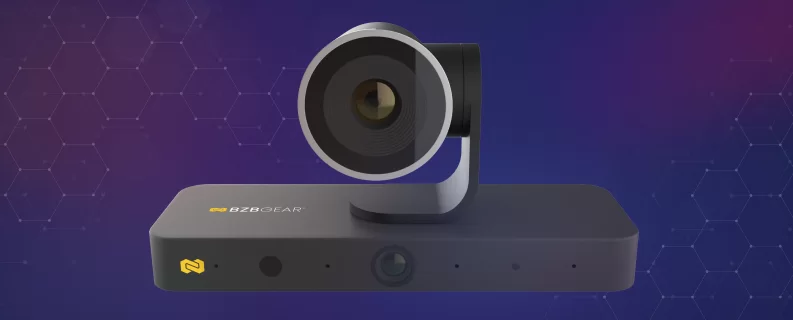
BZBGEAR's BG-AVENTO-4K shows how far this has come. It's a 4K AI-enabled camera with a clever dual-lens design: one panoramic lens watches the whole room while the main lens zooms in on the action. Using a four-microphone array and AI sound localization, it offers Auto Framing, Speaker Tracking, Presenter Tracking, and an "Individuals Gallery" mode that pulls each participant into their own tidy close-up — so remote attendees see everyone clearly instead of a distant huddle.
Smarter Audio Comes Along for the Ride
Here's something people don't always expect: a lot of the "camera" AI is really about sound. Because these systems are already listening to locate speakers, they lean on the same processing to clean up what everyone hears.
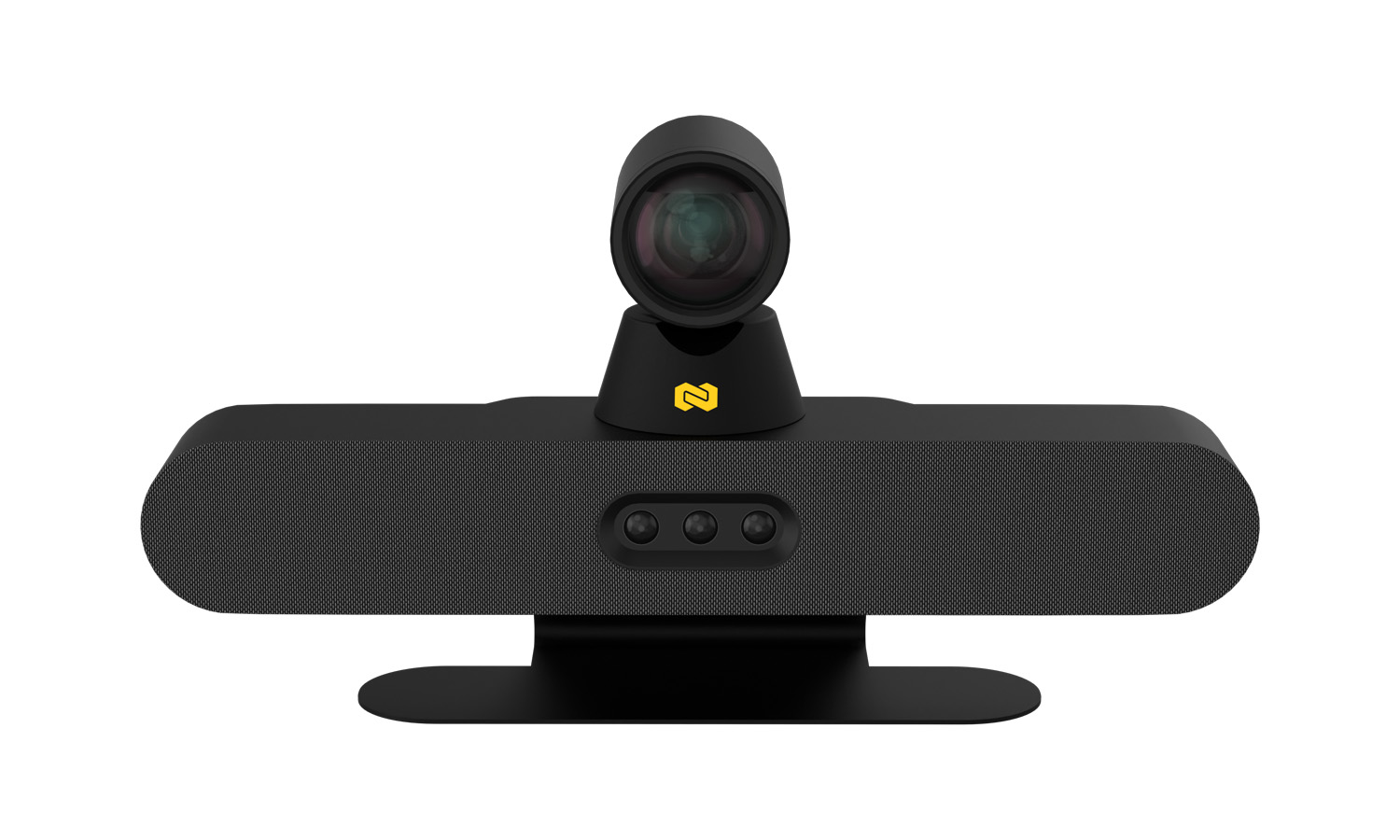
The BG-CYCLOPS-PRO all-in-one video bar is a good example. It pairs AI auto-framing and speaker tracking with a built-in "3A" audio algorithm — acoustic echo cancellation, automatic gain control, and noise suppression — so the person walking past with a coffee machine doesn't derail the call. The picture follows the speaker; the audio stays clean. That combination is what makes a small huddle room feel like a professionally run studio.
The Bottom Line
The big shift isn't that AI makes cameras fancier — it's that it makes great production accessible to people who never had a full crew to begin with. A single teacher, a two-person podcast, a volunteer running Sunday service: all of them can now get tracking shots and clean framing that used to require a team.
If you're weighing an AI-enabled PTZ camera for your classroom, sanctuary, boardroom, or studio, we're happy to help you match the right model to your space. Explore the full lineup of BZBGEAR PTZ and conferencing cameras at BZBGEAR.com — and if you've got questions about how any of it works, just reach out. We're glad to walk you through it.


8.00 a.m. - 5.00 p.m. (PST)
10.00 a.m. - 3.00 p.m. (PST)
(by appointment only)