





Hell N High Water Productions: Scaling Multi-Camera Live Music Production with a Leaner Crew
Client Overview
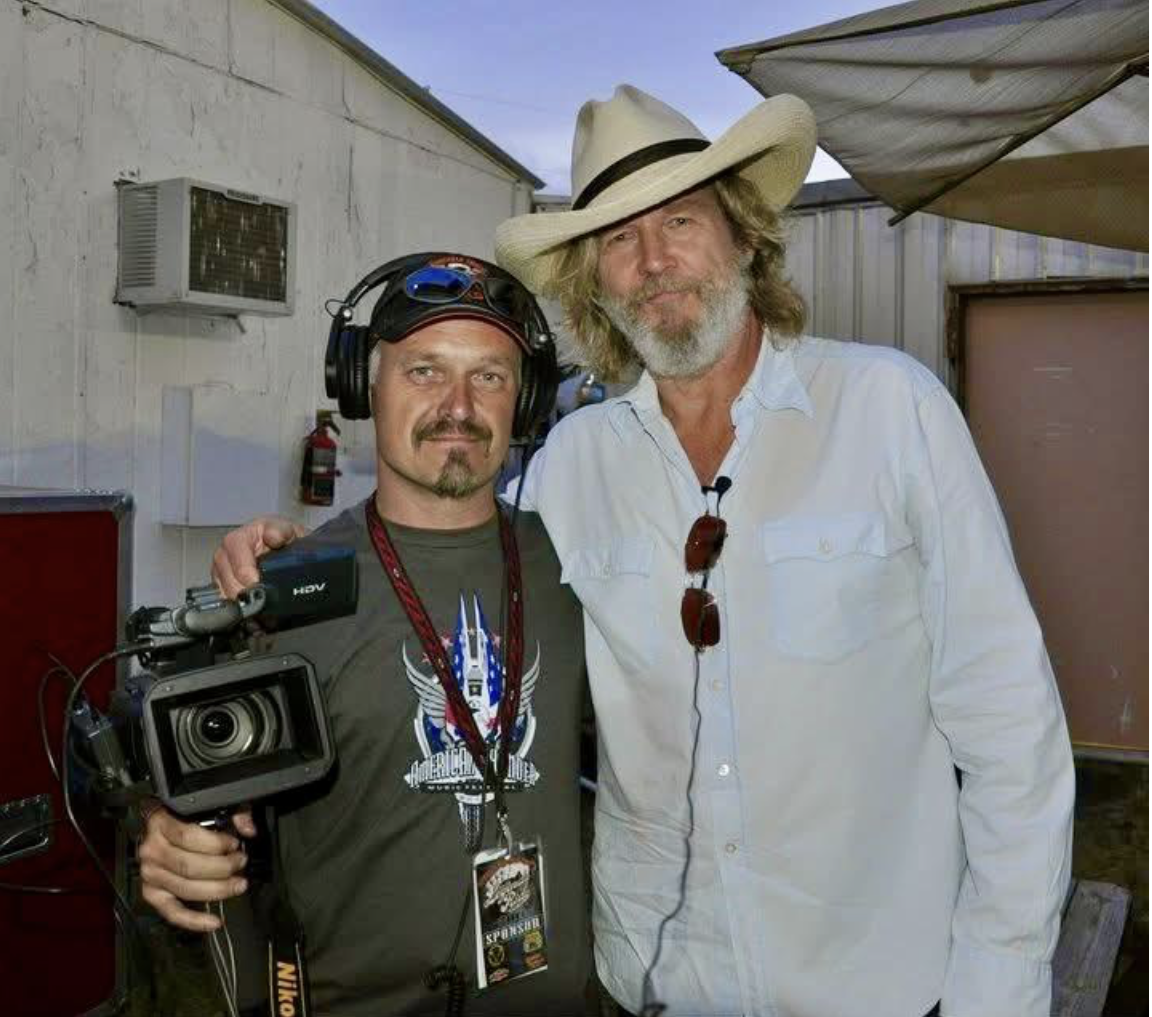
Hell N High Water Productions is the production company of Jason Esparza, a live music director with more than three decades behind the camera and more than twenty years in the director's chair. He's not a musician — he connects to live performance through the camera, and he's always described the job as translation. "My job is to translate that energy," he says, "so the audience feels it through the screen."
Esparza's professional foundation came at Fox Sports, where he worked master control for live broadcasts and learned precision, timing, and how to stay calm under pressure when there is no second take. From there he moved into music — touring, adapting to unpredictable lighting, and capturing performances in real time. A multi-year turning point was Texas Roadhouse Live, an award-winning television series that aired across Texas, Oklahoma, and Louisiana and put him behind the camera for artists from Pearl Jam and Soundgarden to ZZ Top, Merle Haggard, and Billy Joe Shaver. Across his career he's covered everything from jam bands to the Houston Symphony. Today Esparza directs multi-camera livestreams for platforms like nugs.net and produces his own show, Vinyl Voices.
Challenge
Two forces were pressing on Esparza's workflow at the same time.
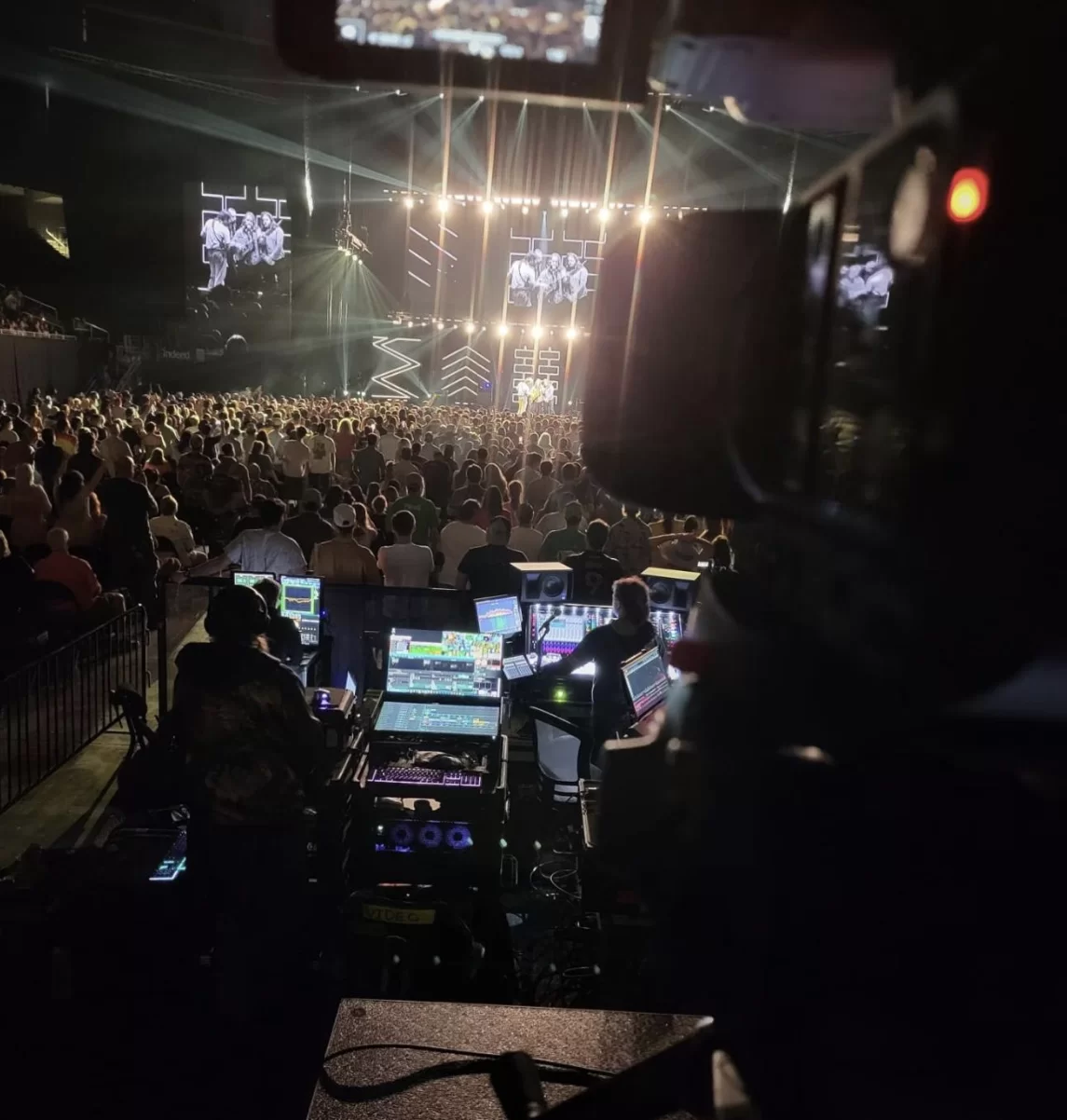
- Budget compression meets rising expectations. "Budgets for livestreaming have dropped," Esparza says, "but expectations haven't." To deliver the coverage he was known for, he was staffing full camera teams on every show. The results were strong, but the labor demand made multi-day events expensive and hard to scale — and the gap between what clients wanted on screen and what the production budget could buy was widening, especially on tight-budget projects like Vinyl Voices.
- Physical sustainability. Ongoing health challenges had made long production days more difficult, and over the last several years Esparza developed tremors on his left side that affected his ability to operate a camera the way he always had. "There's a different level of connection when you're physically framing the moment, reacting in real time, and shaping the visual as it unfolds," he says. Losing that consistency was a creative loss as much as a technical one. He still loved directing, but he needed, in his own words, "a way to keep producing at a high level without putting the same physical strain on myself every time I stepped into a show."
Previous PTZ trials hadn't delivered a viable alternative. "Especially in low light," Esparza says of earlier cameras he'd tested. "They didn't match my Canon XF605 workflow." The result was a production tool that promised efficiency but cost him quality — which defeated the point of owning one in the first place.
Objectives
Key Goals
- Maintain multi-camera quality with a smaller crew. Preserve the directorial coverage Esparza was known for while cutting operator headcount per show.
- Reduce physical load per production. Extend Esparza's sustainable working life in live production by moving work that didn't require hands-on operation into a remote-control model.
- Hold the line on budget-constrained projects. Keep Vinyl Voices and similar tight-budget shows at professional quality without absorbing extra operational cost.
- Regain creative control in real time. Close the gap between the director seeing what a shot needs and being able to fix it — without stopping the show or depending on an operator to read his mind.
Technical Requirements
- 4K imaging with broadcast-grade image quality.
- 12G-SDI output for clean integration with the existing Canon XF605 signal chain.
- Strong low-light performance suited to live-stage lighting conditions, where contrast is dramatic by design.
- Onboard internal recording to provide redundant capture on every angle alongside the live feed.
- Real-time remote control of exposure, color, pan, tilt, zoom, and framing from the director's station via a physical joystick control surface.
Solution
BZBGEAR® Products Deployed
- BG-ADAMO-4K (×3) — 4K UHD PTZ Camera with 12G-SDI, HDMI 2.0, USB 2.0/3.0, and internal recording.
- BG-Commander (×1) — Universal Advanced Serial and IP PTZ Joystick Controller with PoE (supports IP, RS232, RS422, and RS485).
Why the BG-ADAMO-4K Won
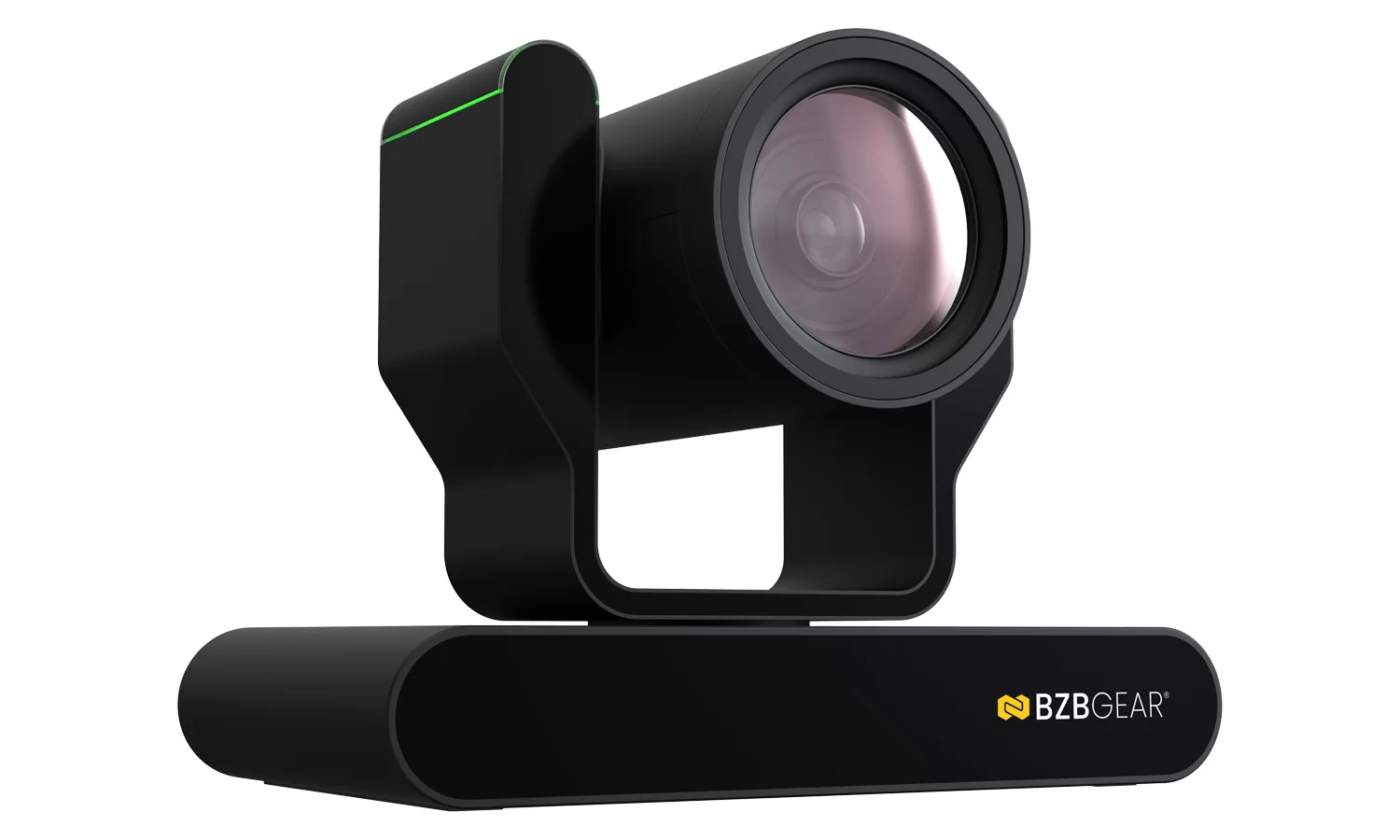
On paper the camera checked the boxes Esparza cared about. What mattered more was how it performed once it was in front of a stage. "These cameras handled low light far better than anything I had used," Esparza says — a category difference, not a marginal one, and a disqualifying concern on every PTZ he had previously tested.
The 12G-SDI output plus internal recording dropped cleanly into his existing Canon XF605 workflow without a format-conversion tax, and the onboard recording gave him redundant capture for every angle he was controlling remotely. For a director who had been burned by PTZs that didn't match his broadcast-grade sources, being able to mix BG-ADAMO-4K feeds alongside his existing rig without compromise was the entry ticket.
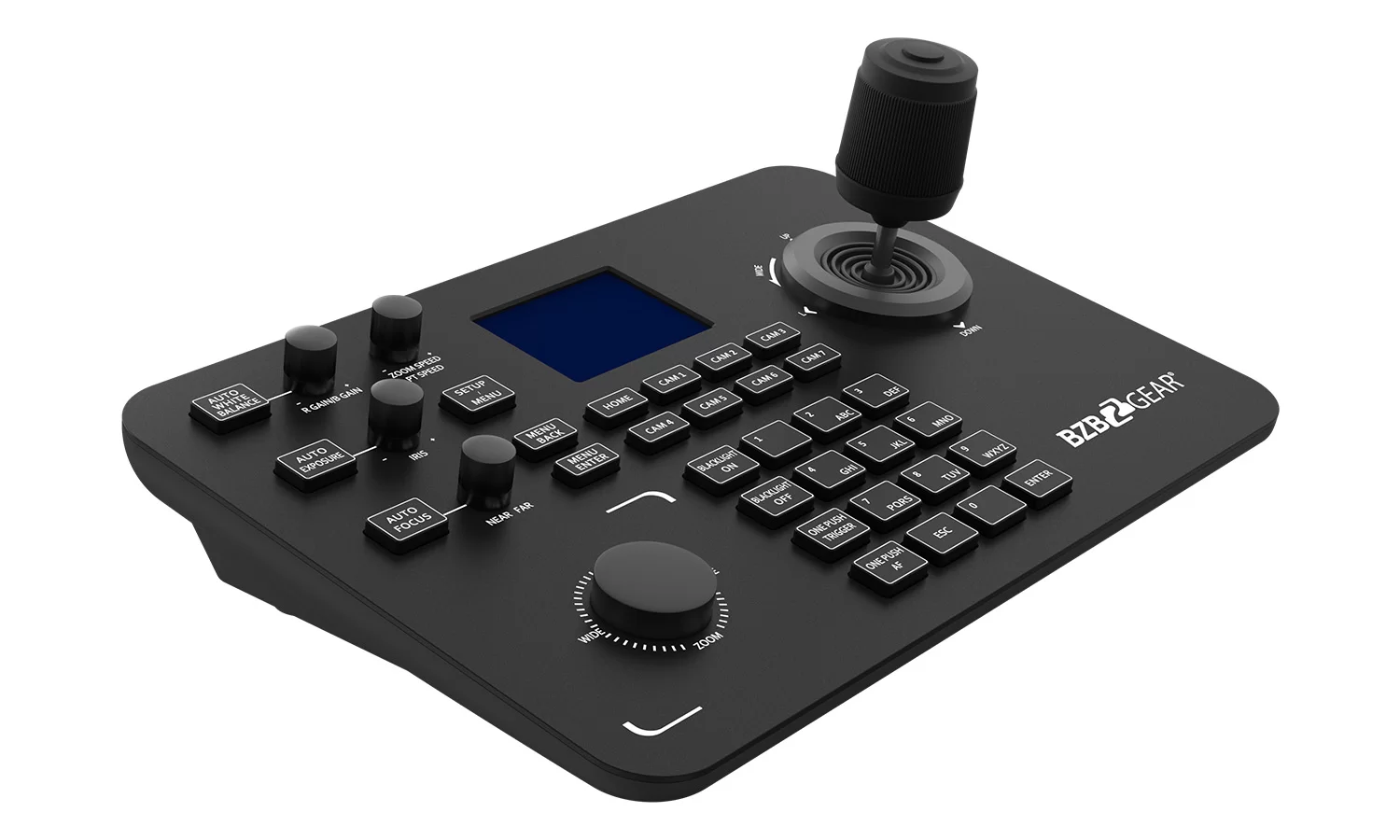
The bigger shift, though, was control. A BG-Commander joystick controller at the director's station gave Esparza physical, tactile command over all three BG-ADAMO-4K cameras — panning, tilting, zooming, and adjusting exposure, color, and framing in real time while the show was running. "No guessing. No hoping someone caught it," he says. "I could fix it instantly." That closed a gap that had frustrated him for years — and kept him in the tactile relationship with the frame that a career camera operator expects from a physical control surface.
Brief System Setup
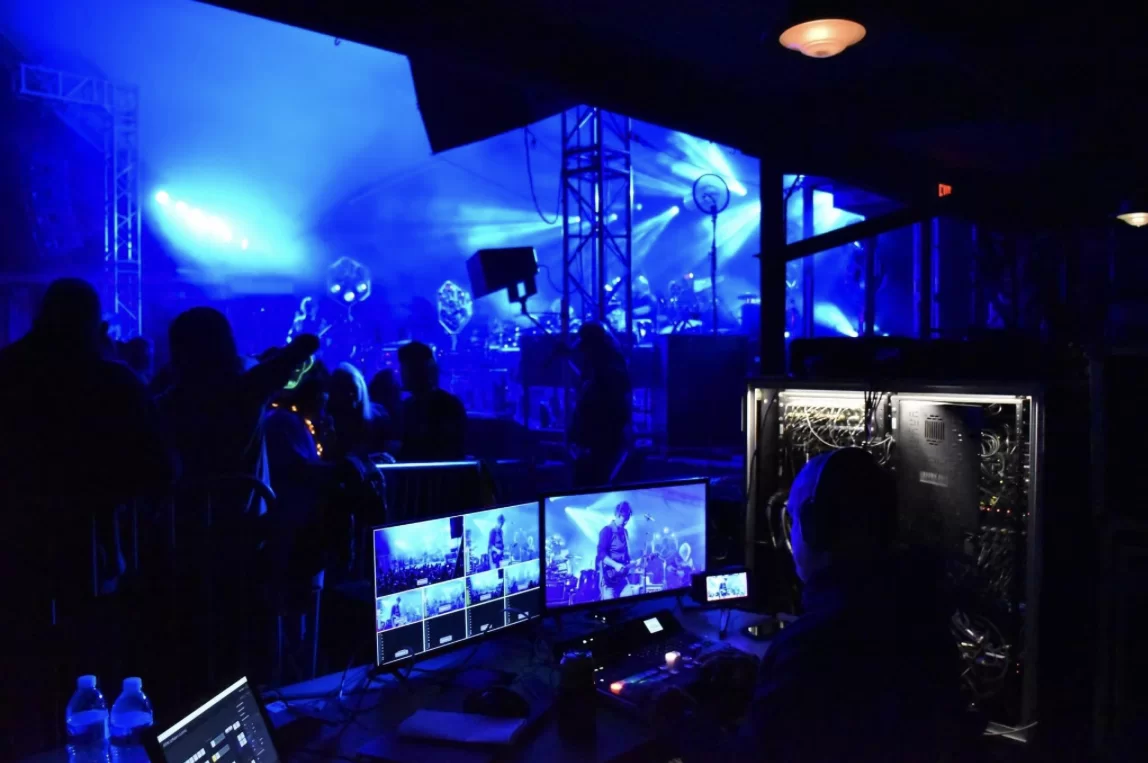
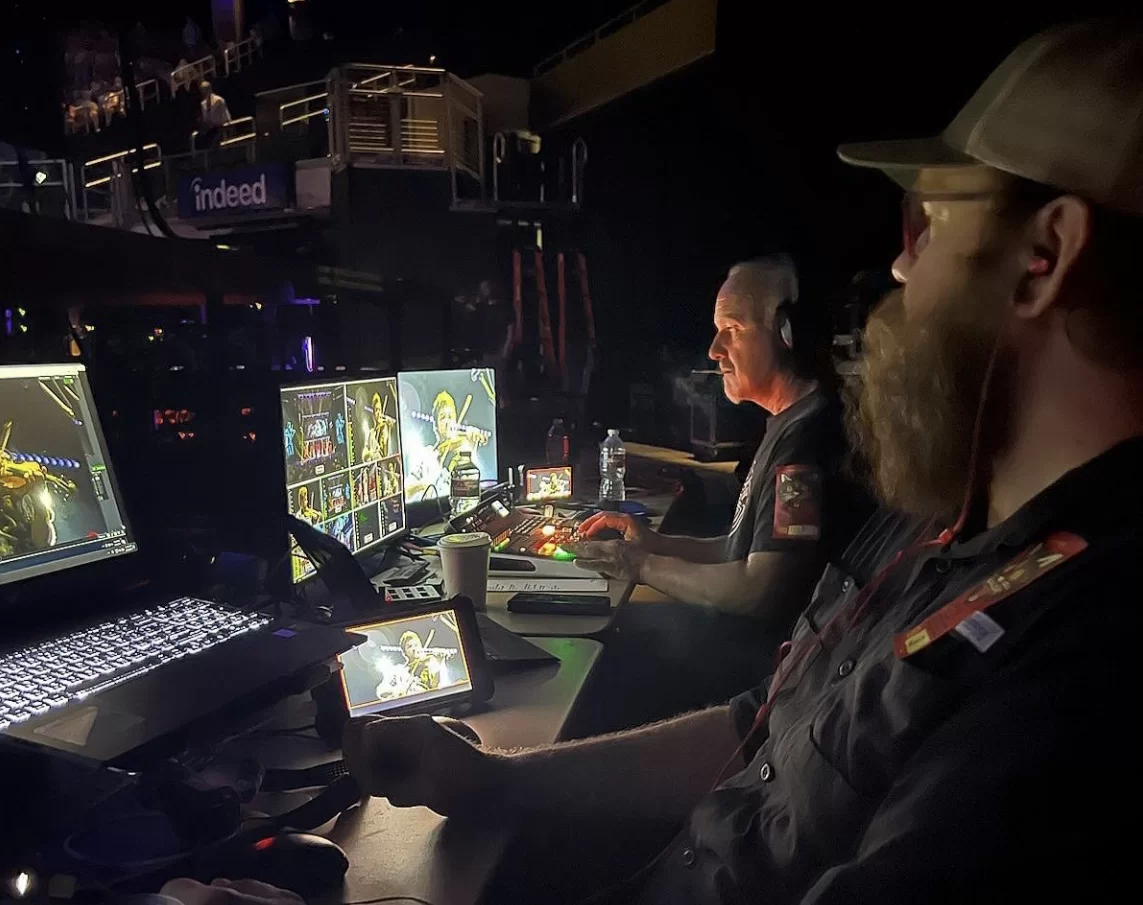
Esparza's production setup pairs two experienced camera operators with three BG-ADAMO-4K cameras, all driven from a BG-Commander joystick controller at the director's station. The human operators cover the shots that reward a live eye — close work with performers, reactive framing during improvisation, shots that depend on physical presence near the stage. The three BG-ADAMO-4K cameras cover the angles that reward consistency and repeatability — wide masters, locked-off alternates, and supplementary coverage — with Esparza panning, tilting, and zooming each one in real time via the BG-Commander. The 12G-SDI outputs drop cleanly into the Canon XF605 signal chain without a format-conversion layer, and onboard recording captures each BG-ADAMO-4K angle locally as a failsafe alongside the live program feed. When a show's budget or logistics demand it, Esparza can run the full multi-camera production from a single station.
Results
- Immediate ROI. "I bought one camera," Esparza says, "and within a single three-day event, the labor savings paid for half of it. Then I bought another." The sequence — cover the investment on one show, buy the next camera, rinse — turned a speculative efficiency bet into a self-funding expansion.
- Leaner crew, same coverage. The standard rig shifted from a full operator team to two operators plus three BG-ADAMO-4K cameras, delivering the same multi-camera look with a significantly smaller footprint. "I still value great operators," Esparza says, "but I'm no longer dependent on a full crew just to get coverage."
- Scalable to single-station operation. Full multi-camera productions can now run from a single director's position when a show requires it — the kind of footprint that used to demand a full operating crew.
- Sustainable workload. Reduced crew coordination and lower physical demand per production extended Esparza's ability to keep working at a high level across long or multi-day events.
- Held quality on tight budgets. On projects like Vinyl Voices, the new setup lets him hold quality without absorbing extra cost — closing the budget-vs-expectation gap that prompted the switch in the first place.
Customer Experience
Esparza's direct testimony frames how the rig translates into his day-to-day work — the craft identity, the practical benefit, and the philosophical bottom line.
"I've spent most of my life as a camera operator. It's something I've always taken a lot of pride in — not just capturing what's happening, but documenting it from my own perspective. In a way, it's like painting. Every operator sees things a little differently, and I've always looked at the camera as a tool to tell the story the way I see it." — Jason Esparza, Hell N High Water Productions
"This setup allows me to work smarter instead of harder. It's less physically demanding, more efficient, and it lets me stay focused on the creative side of directing rather than constantly managing logistics." — Jason Esparza, Hell N High Water Productions
"After more than 30 years, I've learned that gear only matters if it helps tell the story better. These cameras do that." — Jason Esparza, Hell N High Water Productions
Esparza also points to the vendor relationship itself as a differentiator. "When I gave feedback to BZBGEAR, they listened," he says. "Firmware updates improved real-world performance. That level of responsiveness is rare." It's one of the reasons he has continued to standardize on the BG-ADAMO-4K platform rather than hedge across vendors.
Why BZBGEAR
- Low-light performance in a category of its own. The BG-ADAMO-4K handled stage lighting better than any PTZ Esparza had previously tested — a category difference that ended the compromise he'd been making with earlier cameras.
- 12G-SDI workflow compatibility. Native broadcast-grade output integrates directly with existing Canon XF605 sources, with no conversion-layer tax. For directors already running broadcast-grade rigs, BG-ADAMO-4K feeds drop in clean.
- Real-time directorial control via the BG-Commander joystick. Pan, tilt, zoom, exposure, color, and framing adjust live from the director's station through a physical control surface, closing the gap between seeing what a shot needs and being able to fix it immediately — without interrupting the show or relying on an operator to catch the moment.
- Internal recording as failsafe. Every angle is captured locally alongside the live program feed, providing redundant capture on every camera without additional recorder hardware.
- Responsive vendor relationship. Firmware releases reflect real-world field feedback from working directors — a feedback loop Esparza describes as rare in the broadcast category.
- Proven at scale in live music. Esparza now runs three BG-ADAMO-4K cameras across multi-camera livestreams for nugs.net, Vinyl Voices, and other live-music productions — with consistent performance across the range of venues, lighting conditions, and event types that define his work.