


What a Future-Proof HDMI 2.1 AV Workflow Actually Looks Like

When most people hear "8K AV equipment," they picture massive displays and content that doesn't really exist yet. And honestly, that's a fair reaction. Very few applications need native 8K resolution right now.
But here's what a lot of people miss: HDMI 2.1 infrastructure isn't really about 8K. It's about the 48Gbps bandwidth pipeline that makes 4K120, Variable Refresh Rate, Auto Low Latency Mode, full HDR passthrough, Enhanced Audio Return Channel, and yes — 8K60 — all possible on the same signal chain.
That's the real story. The jump from HDMI 2.0's 18Gbps to HDMI 2.1's 48Gbps doesn't just add resolution headroom. It unlocks a set of features that improve what you can do with 4K content today while future-proofing your infrastructure for whatever comes next.
So while only a small number of deployments need 8K resolution right now, a much wider audience — integrators, AV teams, facilities managers, and end users — can benefit from building around HDMI 2.1. The question isn't "do I need 8K?" It's "can my workflow handle what 48Gbps makes possible?"
Here's what that workflow actually looks like, from source to display.
It Starts With the Bandwidth
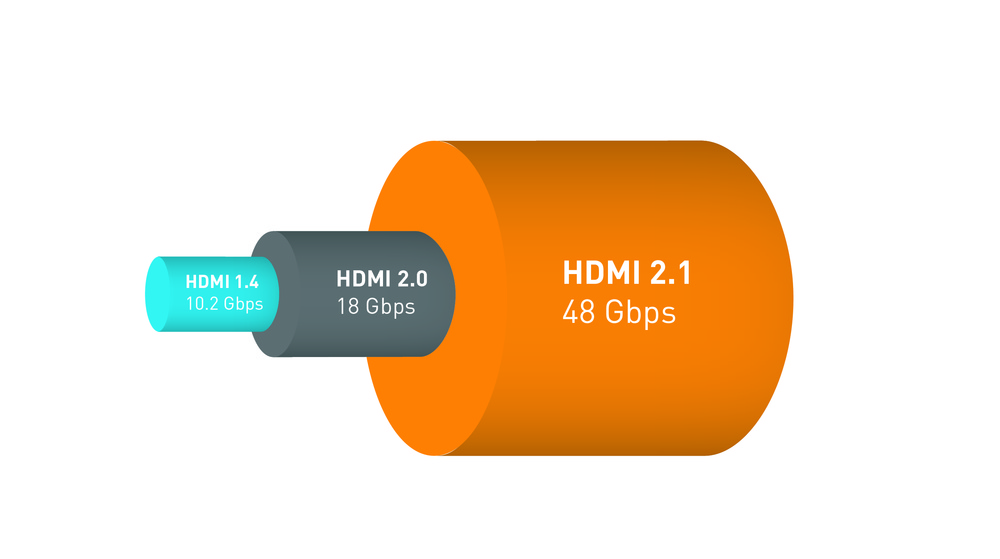
HDMI 2.0 topped out at 18Gbps. That was enough for 4K at 60Hz with 4:4:4 color, and it served the industry well. But it left zero room for higher frame rates, deeper color, or the adaptive display features that modern workflows now demand.
HDMI 2.1 pushes that to 48Gbps using Fixed Rate Link (FRL) signaling. At that bandwidth, you're looking at 4K at 120Hz with full 4:4:4 chroma at 10-bit color depth. You get 1080p at 240Hz. You get enough headroom for dynamic HDR metadata, lossless audio formats over eARC, and gaming features like VRR and ALLM — all running simultaneously. That simply wasn't possible before.
This bandwidth is also what carries 8K60 at 4:2:0 and 8K30 at 4:4:4. So when you build around 48Gbps infrastructure, you're not just buying into 8K as a resolution — you're buying into the full feature set that the bandwidth supports. And most of those features benefit 4K users right now.
Transport Can't Be an Afterthought
In an HDMI 2.0 world, cable selection and distance planning were relatively forgiving. At 48Gbps, they become part of the core architecture.
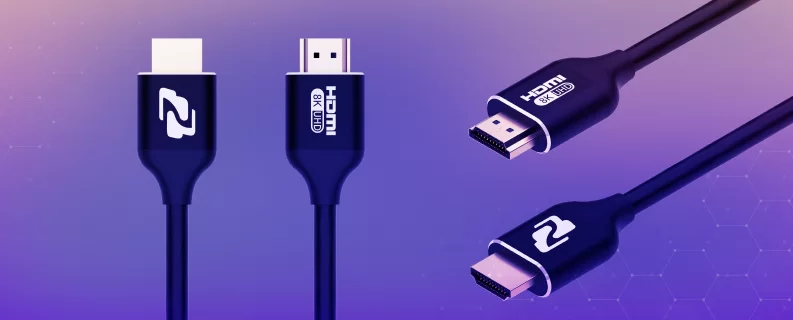
For short runs between nearby devices, a certified HDMI 2.1 cable like the BG-CAB-H21C delivers the full 48Gbps bandwidth in a straightforward plug-and-play connection. But direct copper has distance limits, and at these data rates those limits arrive sooner than many people expect.
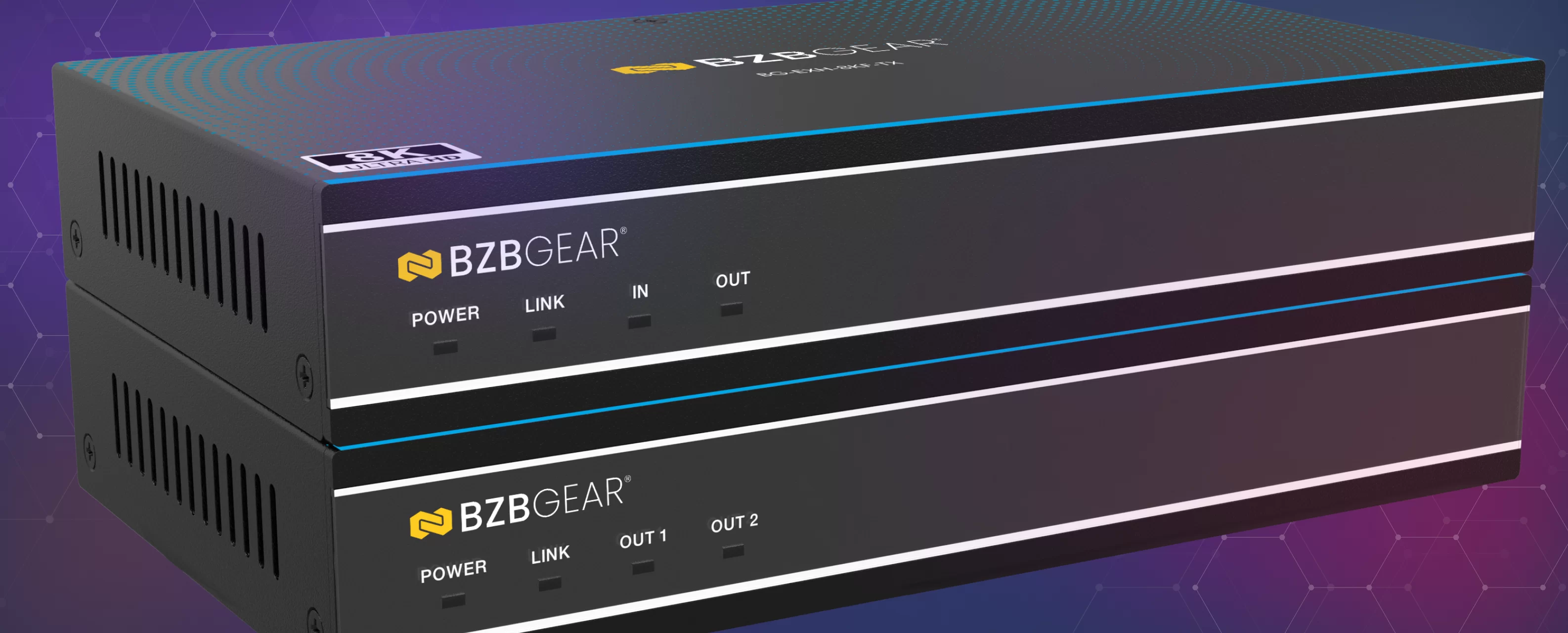
For longer runs, that's where extenders become essential. The BG-EXH-8KF pushes full 48Gbps HDMI 2.1 signals over multi-mode fiber — up to 985 feet over OM4 cable — with IR, RS-232, EDID management, and audio embedding/de-embedding built in. For environments where fiber isn't practical, the BG-EXH-8KC6 handles 4K120 and 8K30 over standard Cat6a cabling up to 295 feet, along with eARC/ARC, PoC, USB 2.0 passthrough, and bidirectional IR. Both extenders support HDCP 2.3, so protected content travels without issues.
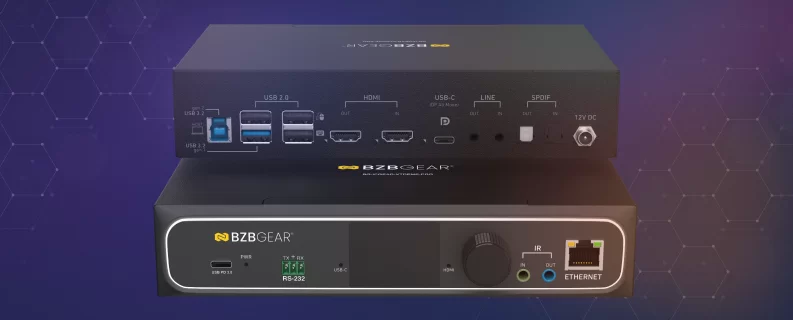
And for distributed environments — campuses, stadiums, multi-building installations — the BG-IPGEAR-XTREME-PRO takes an AVoIP approach, delivering 8K60 and 4K120 over standard 1G network infrastructure with seamless matrix switching, video wall processing, multiview, and KVM from a single transceiver unit.
The important takeaway: at 48Gbps, the transport layer isn't just carrying video anymore. It's carrying 4K120, VRR, ALLM, HDR metadata, and eARC audio. Every cable, connector, and extender either preserves those features or becomes the bottleneck that strips them away.
Switching and Routing: Where Features Survive or Die
Once the signal leaves the source, it usually needs to be routed, switched, or distributed. And in an HDMI 2.1 workflow, this is where many of the features people are paying for either pass through cleanly — or get quietly dropped.
A switcher or matrix that only handles 18Gbps will silently strip 4K120 down to 4K60. It may break VRR negotiation. It may fail to pass dynamic HDR metadata. The display still shows an image, but you've lost the capabilities that justified the upgrade.
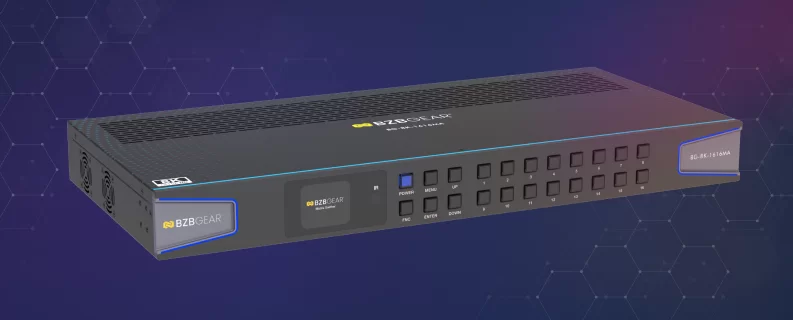
BZBGEAR's 8K HDMI 2.1 matrix switcher lineup is designed specifically to avoid this. The family runs from the compact BG-8K-22MA (2x2) up to the BG-8K-1616MA (16x16), with 4x4 and 8x8 options in between. Every model handles full 48Gbps bandwidth with support for 4K120 at 4:4:4, 8K60, HDR passthrough including Dolby Vision and HDR10+, and audio de-embedding on every output.
What makes these especially useful in mixed environments is the auto downscaling. If a 4K120 or 8K source needs to feed both a high-end display and a standard 4K60 confidence monitor, the matrix handles that conversion automatically. No separate scaler in the chain.
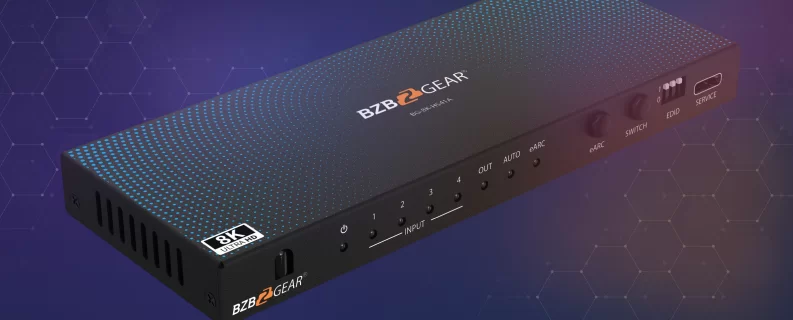
For simpler source selection — say, four sources feeding a single display — the BG-8K-HS41A is a 4x1 HDMI 2.1 switcher with full 48Gbps support that passes VRR, FVA, and ALLM transparently. That makes it just as valuable in a gaming venue or simulation lab as it is in a broadcast control room.
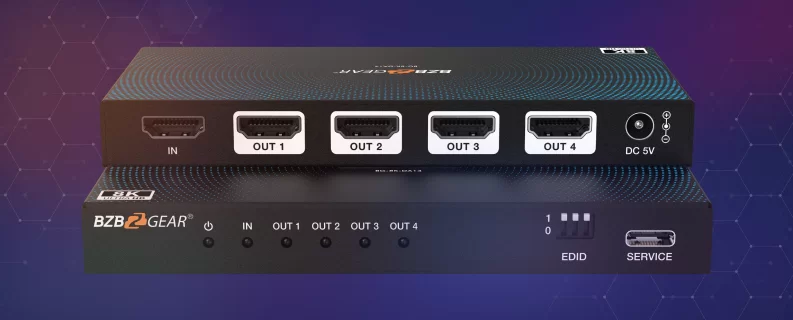
On the distribution side, BZBGEAR's 8K splitters maintain the full feature set across every output. The BG-8K-DA14 distributes one source to four displays with full VRR, ALLM, QMS, QFT, and SBTM passthrough. The BG-8K-DA18 does the same across eight outputs. And the BG-8K-DA12A-G2 adds auto downscaling — so one output can run 8K or 4K120 while the other feeds a standard 4K60 display from the same splitter.
The Features That Make This Worth It
Here's where the workflow pays off in practical terms. These are the HDMI 2.1 features that most users will actually notice — and they all require the 48Gbps pipeline to work properly through the full signal chain.
4K120Hz — The jump from 60Hz to 120Hz at 4K is immediately noticeable. It delivers smoother motion in everything from esports and simulation to medical visualization and broadcast monitoring. Even in corporate settings, 4K120 support means your infrastructure is ready for the next generation of interactive displays and high-frame-rate content.
VRR and ALLM — Variable Refresh Rate eliminates screen tearing by syncing the display to the source's actual frame rate. Auto Low Latency Mode triggers the display's fastest processing path automatically. Together they benefit any real-time application — gaming, simulation, interactive signage, live production monitoring — not just gaming.
HDR passthrough — Dolby Vision, HDR10+, HDR10, and HLG each have different metadata requirements. Dynamic HDR formats need frame-by-frame metadata that demands bandwidth and proper handling at every point in the chain. The BG-8K-88MA, for example, routes eight sources to eight outputs at full 48Gbps with complete HDR passthrough and audio de-embedding on every channel.
eARC — Enhanced Audio Return Channel supports uncompressed 5.1/7.1 audio and high-bitrate formats like Dolby Atmos and DTS:X that regular ARC can't carry. The BG-8K-AE is an HDMI 2.1 eARC adapter that bridges your display's eARC output to a soundbar, receiver, or amplifier while maintaining full 48Gbps video passthrough and HDCP 2.3 compliance. And the BG-EXH-8KC6 keeps eARC intact even when extending signals over Cat6a — one less thing to work around in system design.
Testing the Full Chain
When your workflow supports 4K120, VRR, ALLM, HDR, eARC, and HDCP 2.3 simultaneously, validating that everything negotiates correctly is essential. An EDID mismatch, a handshake failure, or a bandwidth negotiation error can silently downgrade the experience without any obvious indication.
The BG-AVTPG-8K is a full HDMI 2.1 signal generator and analyzer that tests resolutions up to 8K60 and 4K120, verifies HDCP 2.3 handshakes, and validates HDR format support across your entire chain. For field work and on-site validation, the portable BG-AVTPG-MINI-G2 puts the same 48Gbps test capability in a battery-powered unit that goes wherever you do.
Testing isn't optional at 48Gbps. It's how you confirm that the features your client is paying for actually work end to end.
Who Benefits Right Now
The beauty of building around HDMI 2.1 is that you don't have to wait for 8K content to see value. Today's benefits are already compelling.
Esports venues and gaming installations get 4K120 with VRR and ALLM. Broadcast and production environments get full HDR passthrough and higher-refresh monitoring. Houses of worship, lecture halls, and corporate spaces get future-proofed infrastructure that handles today's 4K content and tomorrow's higher-bandwidth formats without a rip-and-replace. Medical and simulation facilities get smoother, more responsive real-time visualization. And any installation with serious audio requirements gets eARC support that opens up lossless surround sound.
The cost difference between HDMI 2.0 and HDMI 2.1 infrastructure has narrowed significantly. The functionality gap has only gotten wider.
Build the Workflow, Not Just the Resolution
That's the real story behind a future-proof HDMI 2.1 AV workflow. It's not a bet on 8K resolution — it's an investment in the full capability set that 48Gbps bandwidth makes possible. 4K120. VRR. ALLM. HDR. eARC. HDCP 2.3. And yes, 8K60 when you eventually need it.
The strongest deployments aren't designed around a single resolution target. They're designed around a signal chain that preserves every feature from source to display. When that chain is solid, the system delivers today and adapts tomorrow.
Whether you're building your first HDMI 2.1 signal chain or upgrading an existing installation, BZBGEAR's full lineup of 48Gbps switchers, matrices, splitters, extenders, and test tools is designed to support every link in that workflow. Ready to start planning? Reach out to our team — we're here to help you build it right.


8.00 a.m. - 5.00 p.m. (PST)
10.00 a.m. - 3.00 p.m. (PST)
(by appointment only)