


How to Sync Multiple Cameras for Live Events
Common Sync Problems in Multi-Camera Setups
Sync issues are often misunderstood because they can appear intermittent or device-specific. In reality, most problems come from a handful of predictable causes: mismatched camera settings, processing latency differences, audio timing errors, or network-induced delay. Understanding these root causes makes sync issues far easier to prevent and correct. If you are still having issues with your BZBGEAR equipment after attempting the suggestions in this article, please reach out to technical support.
Matching Camera Settings First (The Foundation of Sync)
Before adding hardware or delay correction, all cameras must be configured consistently. This step alone resolves a large percentage of sync issues.
Ensure All Cameras Use the Same:
- Resolution
- Frame rate
- Color space and gamma
Even minor mismatches force conversion downstream, adding latency and instability. An exception is when a camera model that’s different from the rest has different processing capabilities, even with the same settings. Otherwise, matching the settings across cameras should work well.
Lock Critical Image Parameters
Automatic camera functions introduce variability. To maintain consistent sync:
- Lock exposure
- Lock white balance
- Lock shutter speed
Why Auto Settings Break Sync
Auto exposure and white balance can trigger internal processing changes mid-shot. These adjustments may cause momentary timing shifts, leading to subtle but noticeable sync drift, especially during lighting changes.
In many cases, setting these parameters to auto is beneficial if the environment has dynamic lighting. But if all cameras are under the same lighting for the majority of the production, manually adjusting settings and locking them in can reduce inconsistencies.
Audio Sync Considerations
Why Audio Goes Out of Sync First
Video latency varies more than audio latency. If audio is not delayed to match video, sync errors become immediately noticeable.
Where to Embed Audio
- At the camera: Keeps audio tied to video, but limits flexibility
- At the switcher or mixer: Offers more control but requires careful delay management
Managing Audio Delay
Best practice is to delay audio to match the slowest video source in the system. Many mixers and processors provide adjustable audio delay specifically for this purpose.
Syncing Cameras Over IP Networks
Understanding IP Video Protocols
Different IP protocols handle compression and buffering differently. Some prioritize low latency, while others trade delay for stability and quality. These differences directly affect sync.
Network-Induced Latency and Buffering
Latency can be introduced by:
- Overworked switches
- Poor cabling
- Packet loss or jitter
Even small inconsistencies can create visible sync offsets.
Network Best Practices
- Use managed switches
- Plan bandwidth carefully
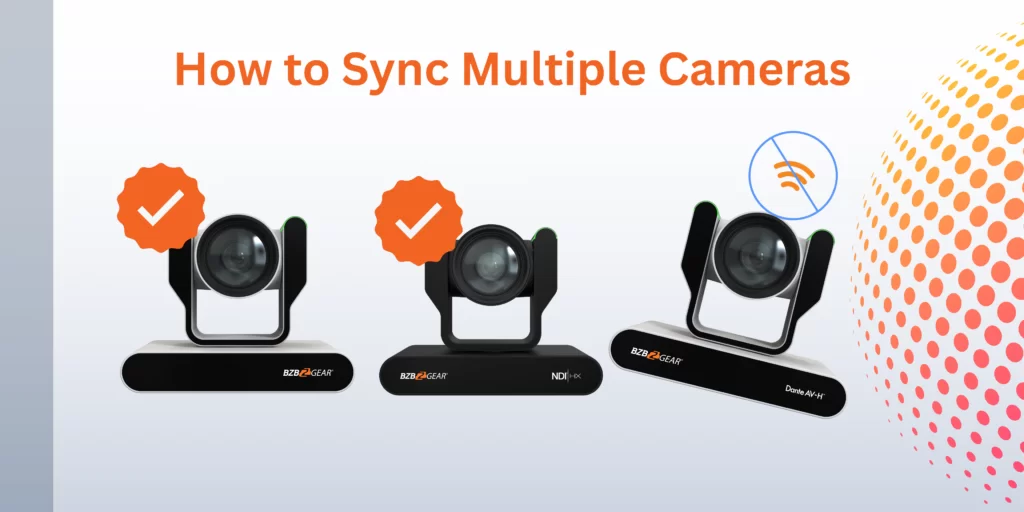
- Avoid Wi-Fi for critical sync paths
- Isolate video traffic from general network traffic
Testing and Verifying Sync Before Going Live
Simple Sync Tests
- Clap test: Align visual clap with audio peak
- Flash or LED test: Compare frame timing visually
Using Multiview
Multiview allow side-by-side comparison of all camera feeds, making frame-level delay differences easier to spot.
Real-Time Monitoring
Always check lip-sync during rehearsal. Audio meters and visual cues should align consistently across cameras before going live.


8.00 a.m. - 5.00 p.m. (PST)
10.00 a.m. - 3.00 p.m. (PST)
(by appointment only)