







How to Future-Proof Your AV Infrastructure

Planning a System That's Still Working Years From Now
Every AV system looks great on install day. The real test comes three or four years later, when the client wants to add a room, a new source format shows up, or a single aging component takes the whole system down. A question we hear all the time is some version of: "How do I build this so I'm not ripping it out again in a couple of years?" And that's exactly the right question to be asking.
Here's the good news. Future-proofing isn't about buying the most expensive gear or guessing which technology will win. It's about making a handful of smart decisions at the design stage that keep your options open later. Let's break down what those decisions actually are.
Build In Bandwidth Headroom
The single most common way systems age out early is bandwidth. You spec for exactly what you need today — 4K@60Hz, say — and then a new source shows up that wants 4K@120Hz or 8K, and suddenly your infrastructure can't carry it.
The fix is to design with headroom. When you're choosing switchers, extenders, and cabling, look at what they can carry at their ceiling, not just what your current sources output. HDMI 2.1 is the standard worth planning around here, because it pushes up to 48Gbps and supports 8K, 4K120, and Variable Refresh Rate. Just be careful: HDMI 2.1 features are optional, so a device can wear the label while only supporting 18Gbps — the same as HDMI 2.0. Read the actual spec, not just the sticker.
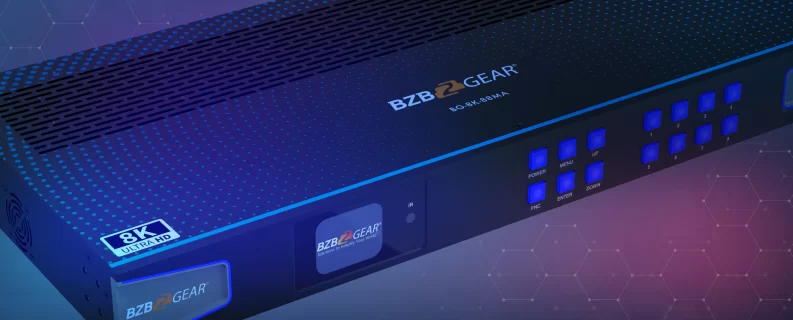
For installations that need real headroom, a full-bandwidth switcher like the BZBGEAR BG-8K-88MA — an 8x8 8K HDMI 2.1 matrix with auto-downscaling and support for 8K60, 4K120, and VRR — gives you room to grow into higher-resolution sources instead of designing right up to the edge of what you can carry today.
Design So the System Is Never "Full"
The second trap is the fixed box. Wire up a multi-room system on a traditional 8x8 matrix and the day you need one more display, you're staring at a switcher that's completely full. Adding capacity means swapping the whole thing — and that's a hard conversation to have with a client.
This is where AV over IP (AVoIP) changes the math. Instead of a fixed number of inputs and outputs, AVoIP puts your video on a standard network. Each source gets an encoder, each display gets a decoder, and a network switch does the routing. Think of it like the difference between a building with a fixed number of hard-wired phone lines versus one running on the office network — adding an endpoint is just plugging in another device, not re-running cable to a central box.
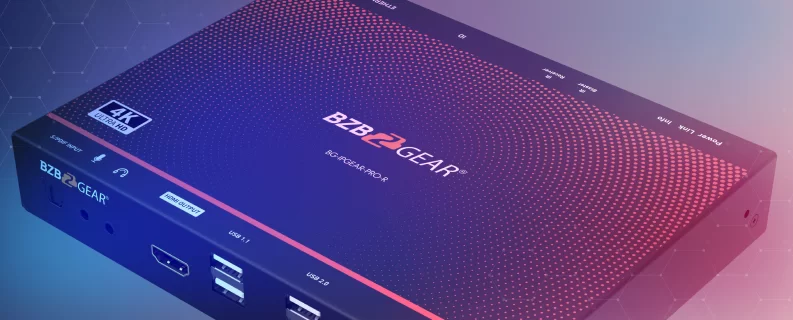
The payoff is that the system grows one device at a time. Need another source? Add an encoder. Another screen? Add a decoder. A scalable platform like the BZBGEAR BG-IPGEAR-PRO series is built exactly for this — separate transmitter and receiver units, PoE to simplify cabling, and a single smart controller that can manage up to 1,024 units on one network. You design for today's room count and let the network carry tomorrow's.
Don't Skimp on the Cabling
Here's the part that gets overlooked, because it's literally hidden in the walls. Your electronics will get swapped out over the life of a building. Your cabling usually won't. Pulling new cable through a finished ceiling is expensive, disruptive, and sometimes flat-out impossible — so the wire you put in today is often the longest-lived part of the whole system.
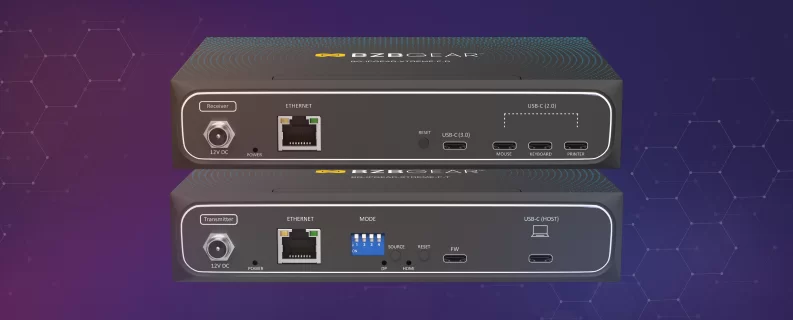
That means it pays to over-build the physical layer. Running Cat6a instead of the minimum spec gives you bandwidth margin for future AVoIP gear. And for any long-distance backbone or run between floors and buildings, fiber is the safe bet — it carries enormous bandwidth over enormous distances and isn't going to be the thing that bottlenecks you later. An HDMI 2.1 over fiber extender like the BZBGEAR BG-IPGEAR-XTREME-F can push uncompressed 4K60 up to 10km over a single-mode fiber run, so distance stops being a design constraint. Put simply: pull better cable than you think you need, because you only get to pull it once.
Favor Open Standards and Interoperability
Proprietary ecosystems can paint you into a corner. When every piece has to come from one vendor and speak one private language, you're betting the whole system on that vendor's roadmap. Building around widely-supported standards keeps you flexible.
On the streaming and distribution side, that means favoring gear that speaks the common protocols — H.264/H.265, RTSP, RTMP, SRT, NDI, and Dante AV-H. A device family like the BZBGEAR BG-STREAM encoders and decoders supports those standards, which means the content you're routing on-premises can also be streamed or recorded without a separate parallel system. Standards-based gear plays nicely with what you already own and with whatever you add next.
Weigh Longevity and Support, Not Just Price
Future-proofing isn't only about the technology — it's about how long the gear keeps running and who stands behind it. Commercial AV lives a hard life. A PTZ camera in a house of worship runs every weekend for years; an AVoIP encoder in a boardroom powers on every single morning. That "install it once and leave it" reality is exactly why build quality and warranty length matter.
A long warranty is really a manufacturer telling you, in writing, how long they expect their gear to keep working — they set those terms based on real field failure data. It's why BZBGEAR backs its Pro Line with a five-year warranty and its cables with a lifetime warranty, paired with seven-days-a-week US-based support. When you're speccing for the long haul, weigh that coverage as seriously as resolution or price. A system that's still supported in year four is a system you're not rebuilding in year four.
The Bottom Line
Future-proofing your AV infrastructure comes down to a few habits: build in bandwidth headroom so tomorrow's sources still fit, design on a network so the system is never full, over-build the cabling you can't easily replace, lean on open standards, and choose gear that's built and backed to last. Do those things and you've designed a system that expands when your needs do — instead of one you're tearing out before it's paid for itself.
If you're planning a build and want help speccing infrastructure that's ready for what's next, reach out — we're happy to talk it through. Explore the full lineup at BZBGEAR.com.


8.00 a.m. - 5.00 p.m. (PST)
10.00 a.m. - 3.00 p.m. (PST)
(by appointment only)