
BZBGEAR PTZ Cameras: A Simple Guide to Choosing the Right One
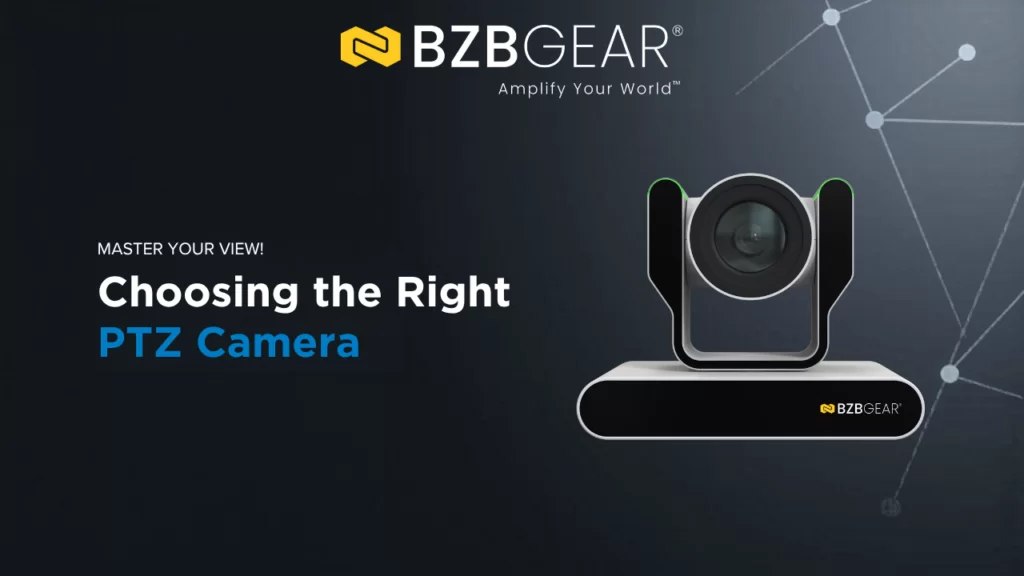
Diving into the world of PTZ cameras can be a bit overwhelming, the choices can look more complicated than they really are.
From a surface level, many models seem similar. Of course they all pan, tilt, zoom, and deliver a video signal but that’s expected. Once you look a little closer, the differences start to matter: some can be better choices for basic live streaming, some are best suited for broadcast, some make the most sense for conference rooms, and sometimes they’re even specifically designed for medical environments. Making the right choice depends on what the use case is, what video quality you need, what outputs your system uses, and whether special features like AI auto-tracking, NDI, tally lights, or medical certification are important.
BZBGEAR’s current PTZ lineup includes six main camera families: BG-VPTZ-HSU3, BG-UPTZ, BG-ADAMO-JR, BG-ADAMO-4K, BG-AVENTO-4K, and BG-NUTRIX. These options cover everything from simple 1080p classroom and meeting-room installs all the way to advanced 4K production and healthcare monitoring. The easiest way to understand the lineup is to think of it in layers: From specialized cameras for medicine, to advanced broadcast focused cameras and then all the way down to the entry level 1080p options.
What Is a PTZ Camera?
PTZ stands for Pan, Tilt, Zoom.
A PTZ camera can move left and right, tilt up and down, and zoom in and out, all remotely and all without needing someone physically moving the camera. That means one camera can cover a lot more space than a fixed camera. In many environments, that reduces the need for multiple cameras or a large camera crew. PTZ cameras are common in live streaming, education, houses of worship, conference rooms, corporate AV, and broadcast workflows because they are flexible and easy to operate once installed.
The most important thing to know as a beginner is that not every PTZ camera is built for the same kind of job. Some are designed to be affordable and simple. Others add broadcast outputs like SDI. Others focus on AI tracking. And some are purpose-built for very specific use cases, like hybrid meetings or patient monitoring.
A Simple Way to Understand the Lineup
Here is the easiest way to think about these six models:
- BG-VPTZ-HSU3 is the compact starting point.
- BG-UPTZ is a more flexible 1080p option with more control and streaming features.
- BG-ADAMO-JR is the first real step into higher-end production and AI auto-tracking.
- BG-ADAMO-4K is the more advanced 4K broadcast-style option with the same feature set as the ADAMO-JR such as AI auto-tracking etc.
- BG-AVENTO-4K is a conference-room camera built around AI speaker tracking and dual-lens coverage.
- BG-NUTRIX is a medical-grade PTZ camera for healthcare use.
Now let’s look at each one of these in more detail.
BG-VPTZ-HSU3: The Basic, Compact Option
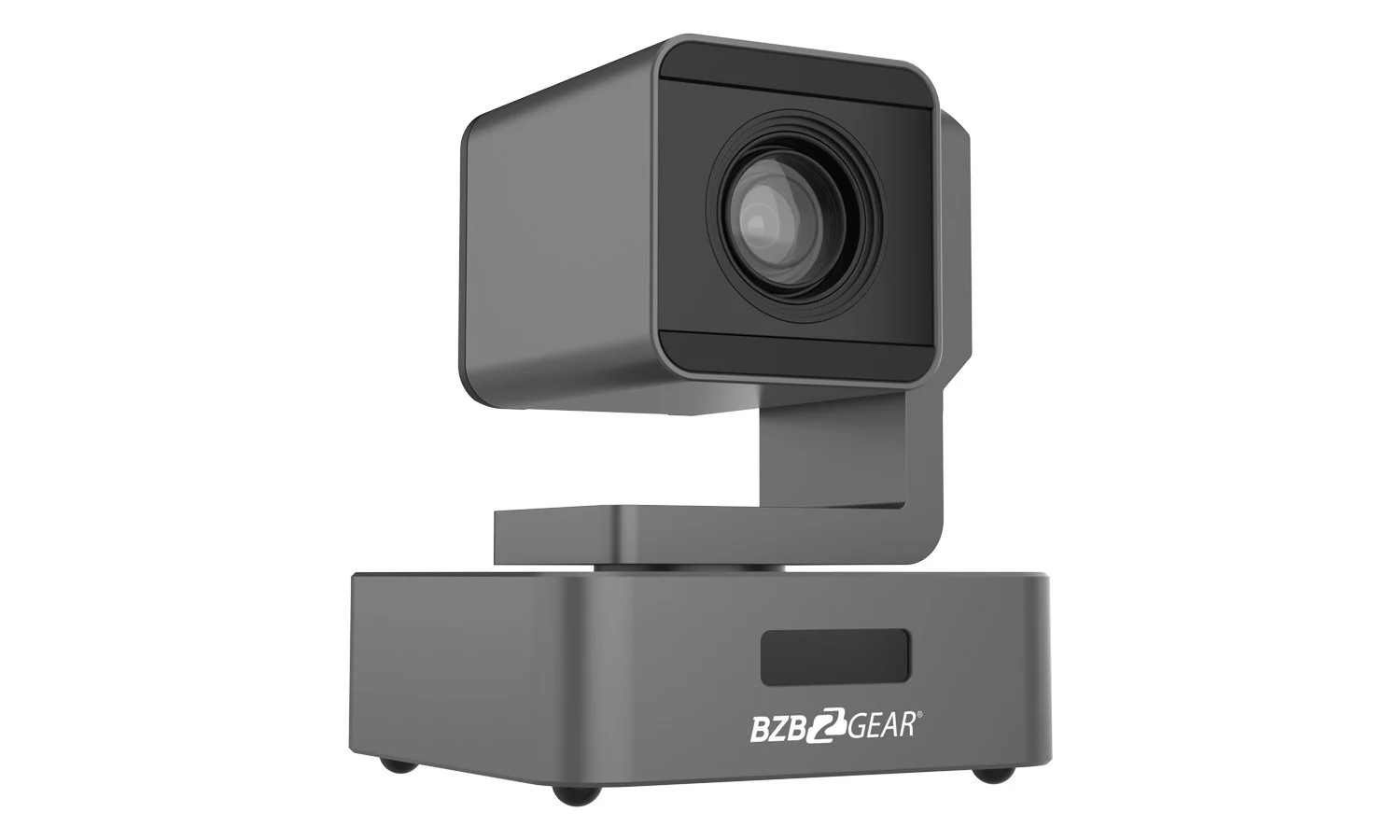
The BG-VPTZ-HSU3 is the most approachable camera in the lineup.
It is a 1080p camera designed for users who need a straightforward PTZ solution without spending for features they may never use. It supports up to 1080p@60, comes in 10X, 20X, and 30X zoom versions, and offers a strong set of outputs for an entry-tier model: HDMI, 3G-SDI, USB 3.0, and IP streaming. That makes it easy to fit into many existing systems especially with it having POE.
There is also an NDI|HX2 variant for workflows that need NDI. To put it simply, this is a good camera for classrooms, smaller worship spaces, conference rooms, and general-purpose live streaming where reliability is the biggest concern.
BG-UPTZ: A Better Fit for More Demanding 1080p Workflows
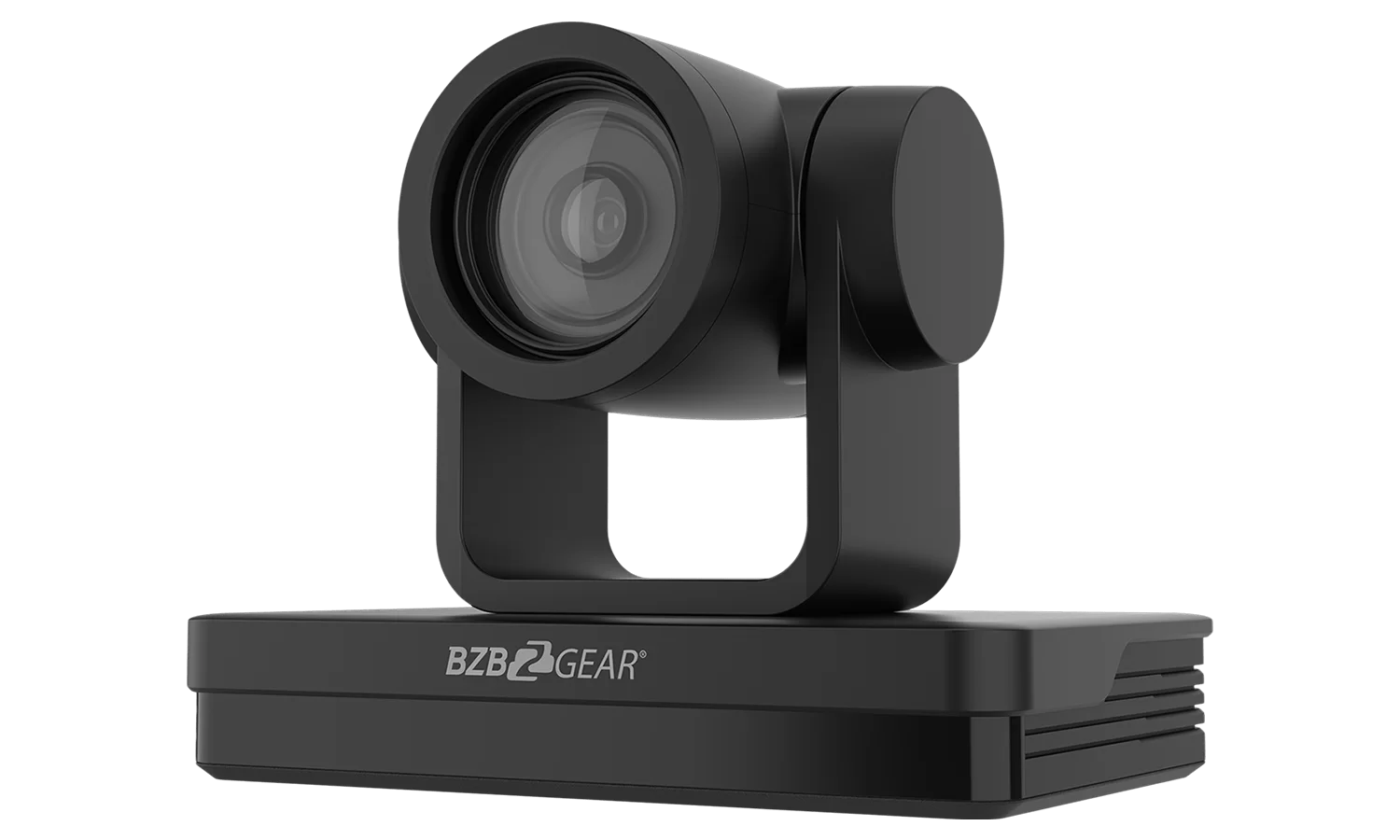
The BG-UPTZ is also a 1080p camera, but it adds a little more flexibility when compared to the BG-VPTZ.
It supports 1080p@60 and comes in 12X, 20X, and 30X zoom versions. It also provides HDMI, 3G-SDI, USB 3.0, and IP streaming, so from a distance it may look very similar the the BG-VPTZ. However the difference is in workflow support, the UPTZ is a more versatile model for users who need broader control compatibility and SRT support for more reliable low-latency internet streaming. It also supports RS-232 and RS-485, which can matter in larger facilities or more structured control environments. You will also experience a better visual quality with the BG-UPTZ when compared to the VPTZ.
For someone new to PTZ cameras, the simplest way to describe it is this: if the HSU3 is the “basic dependable option,” the UPTZ is the “more flexible 1080p option.” It is still affordable compared with the higher-end models, but it gives you a wider control and streaming toolbox.
BG-ADAMO-JR: The First Big Step Up
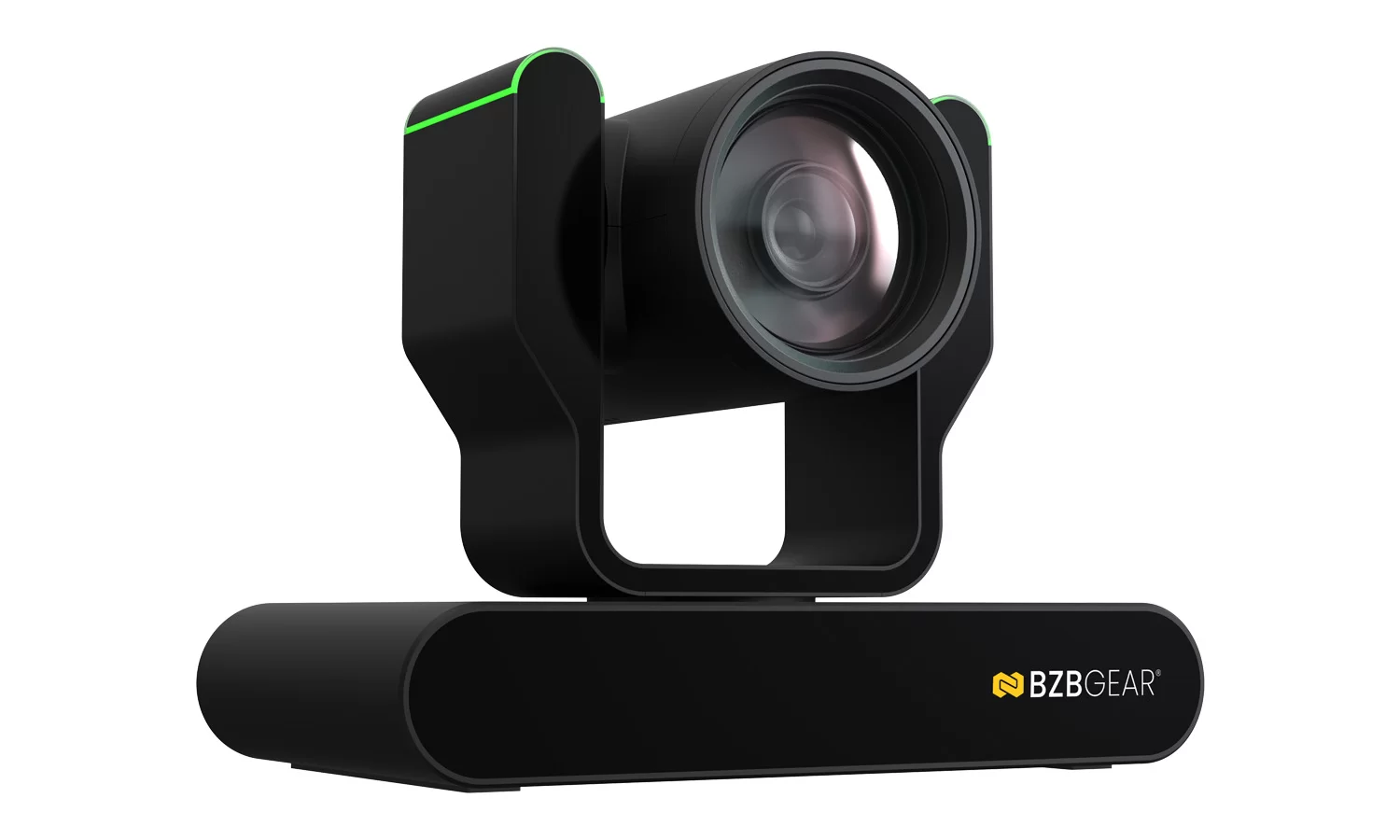
The BG-ADAMO-JR is where the lineup starts to incorporate more premium features to separate itself from the entry level options.
This is still a 1080p@60 camera, but it adds features that are much more useful in live production and more polished AV environments. It supports AI auto-tracking, tally lights, PoE, SRT, microSD recording up to 1 TB, and both USB 2.0 and USB 3.0 outputs. It is also available in optional NDI|HX3 and Dante AV-H versions. Those features move it well beyond a basic classroom or meeting camera.
AI auto-tracking is especially important. Choose from either Presenter Tracking and Zone Tracking, or in other words it means the camera can automatically follow a speaker or stay focused on a chosen activity area. For churches, lecture halls, corporate presentations, and one-person production setups, that can be a major advantage.
BG-AVENTO-4K: The Meeting-Room Specialist
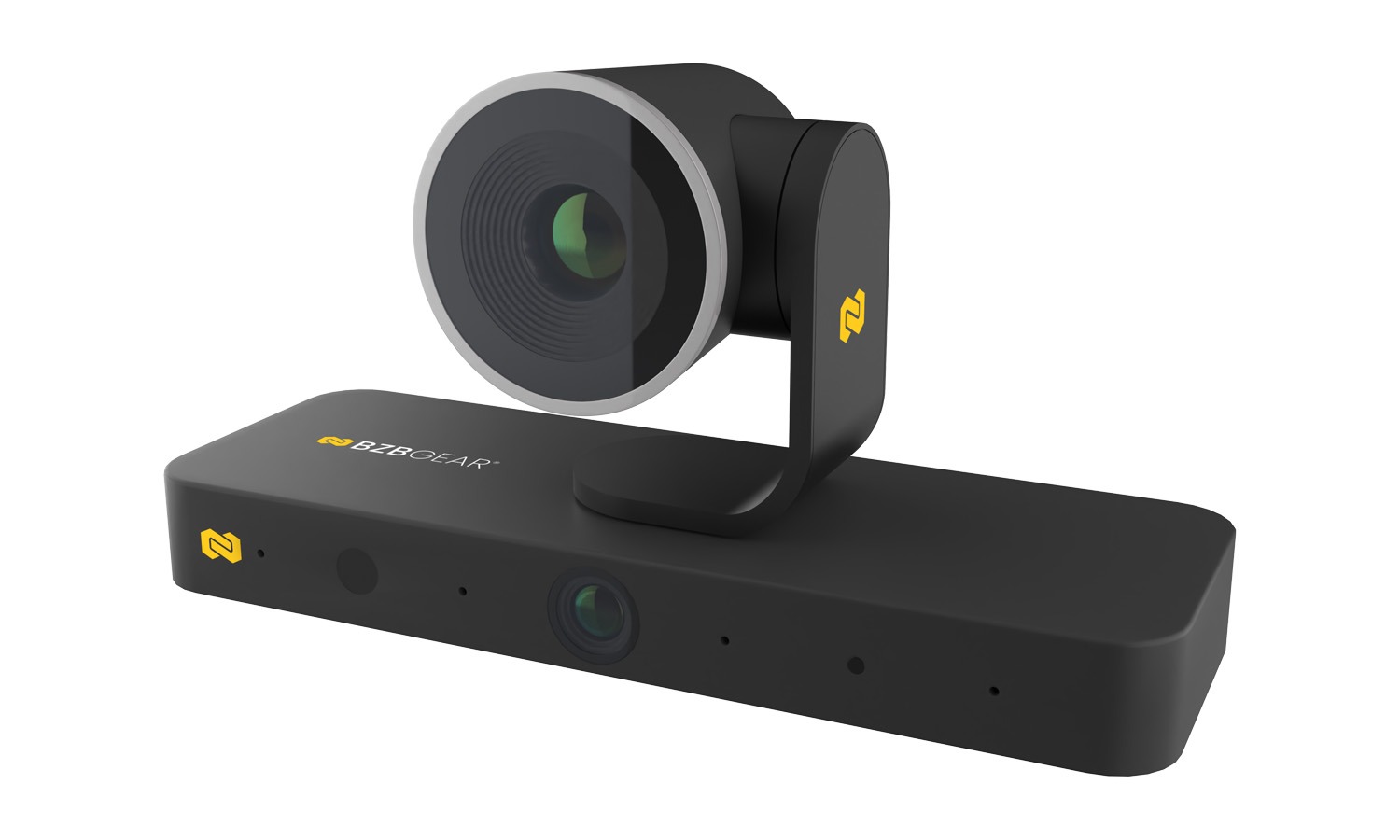
The BG-AVENTO-4K is different from the rest of the lineup.
Most of BZBGEAR’s PTZ cameras are shaped around production, streaming, or installation flexibility. However the AVENTO is designed around hybrid meetings and conferencing. It uses a dual-lens design, combining a PTZ camera with a panoramic camera so the system can show both a close-up view and a wide room view at the same time.The AVENTO also comes with AI-based speaker tracking, AI auto framing, presenter tracking, and individual gallery view, all of which are aimed at making meetings feel more dynamic and natural.
The BG-AVENTO-4K is TAA Compliant and comes with NDI. This combination makes it stand out not just as a conference camera, but as a solution for professional and procurement-sensitive environments. In practical terms, this is the model for conference rooms, training rooms, and collaboration spaces.
BG-ADAMO-4K: The Broadcast-Oriented 4K Option
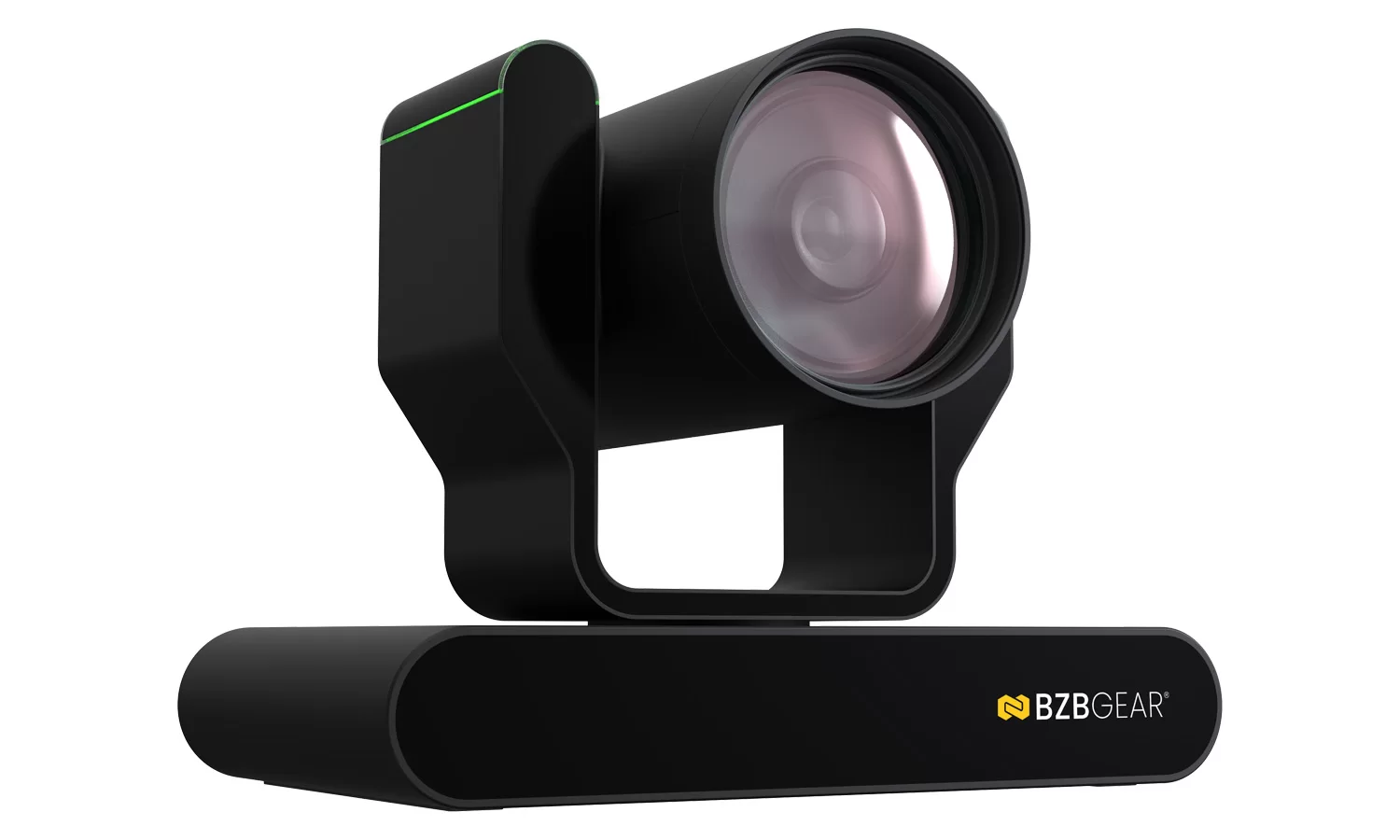
The BG-ADAMO-4K takes the ADAMO concept and pushes it into more demanding production work.
This camera supports 4K60 and adds 12G-SDI, which is a major point of separation from the lower-tier cameras. If you are new to SDI, the simple version is that 12G-SDI is useful in professional video environments that need high-quality 4K over a single SDI cable. The camera also includes HDMI 2.0, USB 2.0, USB 3.0, IP streaming, SRT, PoE, tally lights, and optional NDI|HX3 and Dante AV-H variants.
This is the model to look at when image quality, broadcast integration, and stronger production features matter. It is a much better fit for larger houses of worship, auditoriums, event production, and broadcast workflows than the entry-level models. It’s also worth noting that this camera is quite the award winner for being such a disruptive option at its price point!
BG-NUTRIX: The Specialized Medical Camera
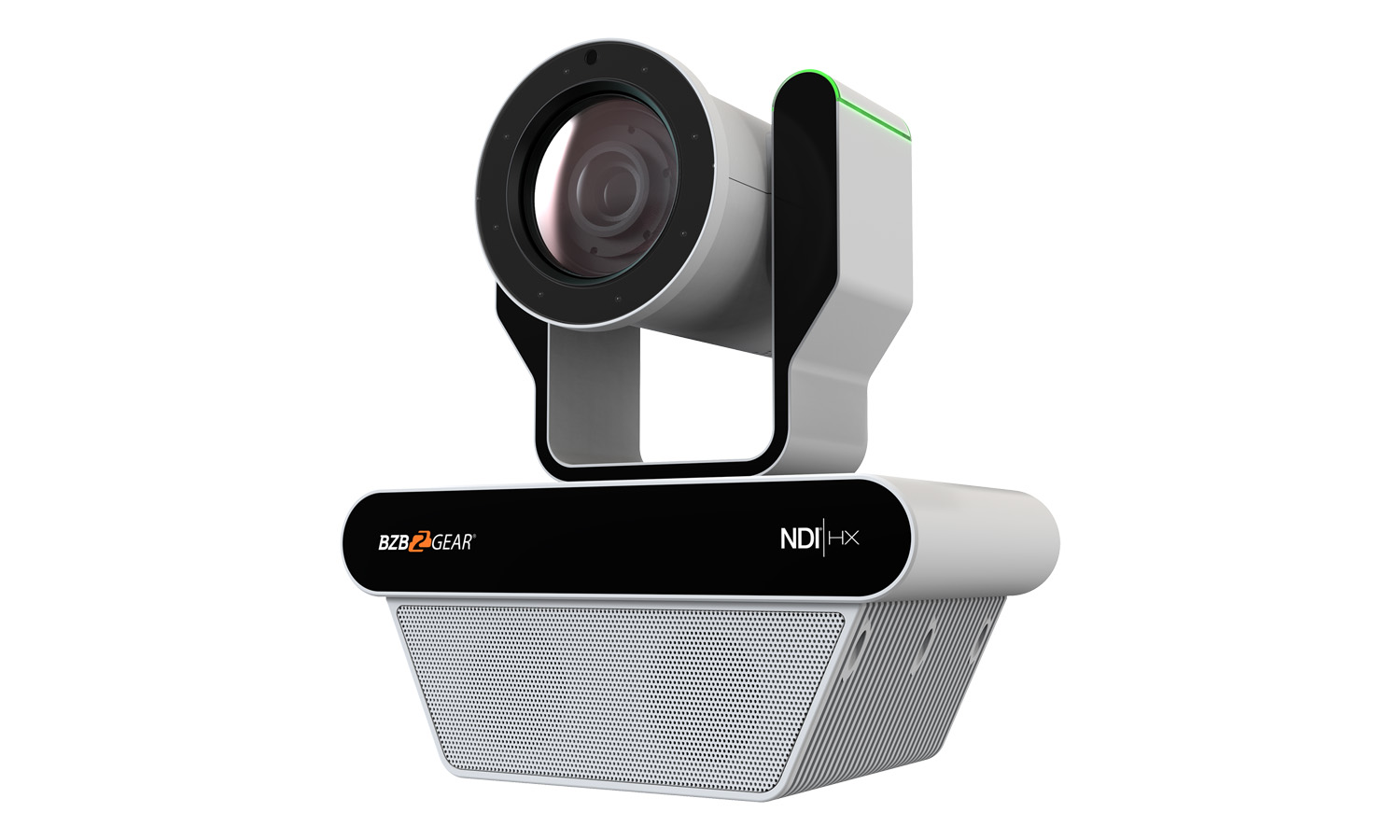
The BG-NUTRIX is the most specialized model in the lineup, and for good reason.
This IEC 60601-certified medical-grade PTZ camera supports 4K UHD and Full HD video, 30X optical zoom, night vision, NDI|HX, AI auto-tracking, microSD recording, and integrated speakers and microphone for two-way communication.
These features make the BG-NUTRIX ideal for various medical applications. The IEC 60601 medical certification ensures that the camera meets safety standards for medical environments. The IEC 60601 certification is a mandatory requirement for medical devices to be sold in most countries worldwide. It is designed to ensure the safety and reliability of medical equipment, particularly concerning the electrical and electronic components that make up the device.
The software side is also a major selling point of the NUTRIX. The BG-NUTRIX Medical Software is built for inpatient and outpatient monitoring and management and includes camera discovery on the local network, live audio/video monitoring, PTZ control, presets, AI auto-tracking control, NDI-based video feeds, privacy settings including image blur, location assignment by department/floor/room, role-based access for User/Admin/Manager, and a Patient Data Access section showing who the patient is, where they are located, and important medical information for the call. That means the NUTRIX is a purpose-built healthcare monitoring system rather than just a camera with a few medical labels added to it.
Understanding NDI|HX2, NDI|HX3, and Dante AV-H

One of the easiest ways to separate these PTZ cameras is by the kind of networked video workflow they support. In BZBGEAR’s lineup, some models are available with NDI|HX2, some with NDI|HX3, and some with Dante AV-H. These are not just labels, they actually provide a new way for the camera to fit into your production environment, how much bandwidth it uses, and what kind of system it is best suited for.
NDI|HX2 is the earlier compressed NDI format commonly used in cost-conscious and bandwidth-conscious PTZ workflows. In practical terms, HX2 is a good fit for everyday live streaming, worship, education, and conferencing installs where integrators want NDI compatibility without stepping up to a more advanced production-tier camera. It offers good enough networked video without killing you on bandwidth requirements. However, the implementation of it could be a bit inconsistent as there was no standard with HX2.
NDI|HX3 is the newer NDI format and is generally the stronger fit for users who want a more modern network-production workflow. NDI’s documentation positions HX3 as a distinct current format alongside HX2, and every HX3 camera does need to go through a verification process with NDI itself to ensure that it aligns with HX3 specifications.For a general purpose, the simplest and safest way to describe the difference is this: HX2 is the lighter-duty, earlier compressed NDI option, while HX3 is the newer-generation option used on more advanced production cameras that has the goal of producing a higher quality image and a more consistent experience through NDI verification. That makes HX3 the more natural choice when image quality, responsiveness, and tighter integration into professional live production matter more.
Dante AV-H is a different kind of network story. Audinate describes Dante AV-H as a software-based Dante AV solution built for H.264/H.265-based video endpoints, designed to bring Dante interoperability, device management, and independently routable Dante audio into lower-bandwidth video products. It supports video up to 4K@60 4:2:0 and is aimed at standard 1G Ethernet environments. In simple terms, Dante AV-H is appealing when the goal is not just “get video onto the network,” but “make this camera part of a broader Dante ecosystem”. That is why it can be especially attractive in larger commercial AV systems that already rely on Dante workflows.
Which Camera Should You Choose?
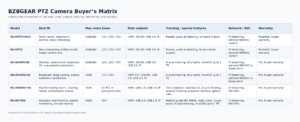
If you are new to PTZ cameras, this quick guide may help:
Choose BG-VPTZ-HSU3 if you want the simplest and most affordable general-purpose PTZ option.
Choose BG-UPTZ if you still want 1080p, but need more flexibility in control and streaming.
Choose BG-ADAMO-JR if you want better production features, tally lights, and AI auto-tracking without stepping up to 4K.
Choose BG-ADAMO-4K if you need 4K and more serious production integration, especially 12G-SDI.
Choose BG-AVENTO-4K if your focus is hybrid meetings, AI speaker tracking, and room coverage rather than classic production.
Choose BG-NUTRIX if you need a camera specifically designed for healthcare monitoring and communication.
What Matters Most When Comparing Them?
If you are still unsure, focus on these questions:
Do you need 1080p or 4K?
The VPTZ, UPTZ, and ADAMO-JR are 1080p cameras. ADAMO-4K and NUTRIX move into 4K, and AVENTO is built around 4K conferencing workflows.
Do you need SDI?
If your workflow uses professional SDI infrastructure, the ADAMO series is your go to, whether you need 12G SDI or just 3G SDI, these cameras are built for broadcast.
Do you need AI auto-tracking?
You’ll want to look at the ADAMO-JR, ADAMO-4K or the AVENTO-4K. ADAMO-JR or ADAMO-4K for most content creation and the AVENTO for conferencing applications.
Do you need NDI?
Good news! All of these cameras support NDI (as long as you pick the model with it)! So you’ll need to narrow it down by your use case for the camera.
Is the room a meeting room, a production space, or a medical space?
That makes it pretty simple if you can answer this question. The AVENTO is built for conferencing. The ADAMO models are the best for more professional production use, but you can use the UPTZ or VPTZ if budget is a concern. And finally the NUTRIX is purpose built for healthcare.
Final Takeaway
BZBGEAR’s PTZ lineup is easier to understand when you ask yourself what the job of each camera is instead of aimlessly comparing specs.
Some cameras are built to be practical and affordable. Some are built for polished live production. Others are built to tackle modern hybrid meeting rooms or even for healthcare. The best choice is not the model with the most features. It is the model whose features match the real-world environment you are trying to support.


8.00 a.m. - 5.00 p.m. (PST)
10.00 a.m. - 3.00 p.m. (PST)
(by appointment only)